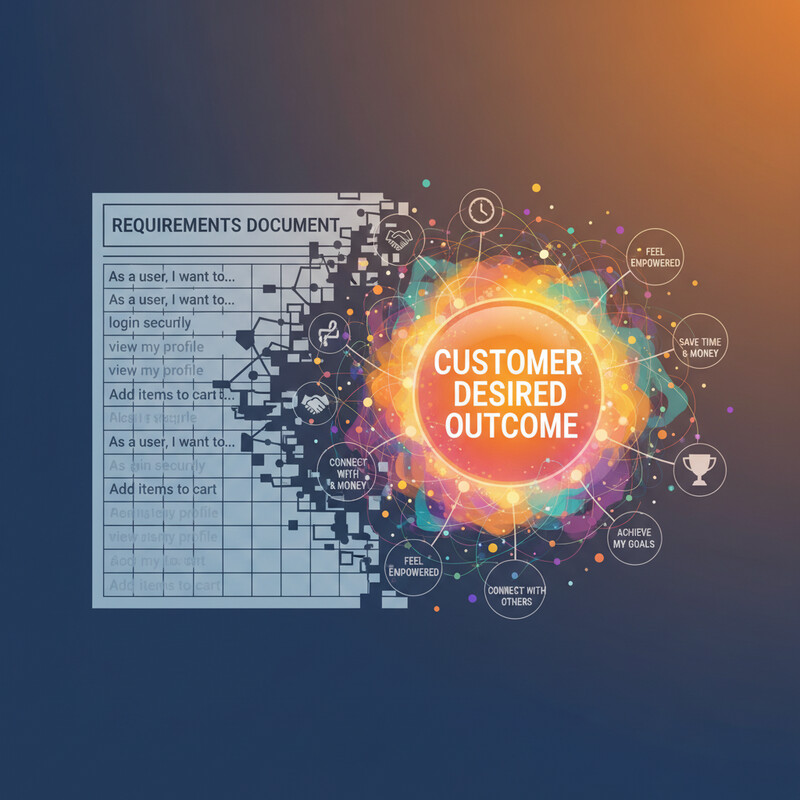
For years, the ‘As a [user], I want [action], so that [benefit]’ user story has been the bedrock of agile development. It’s simple, familiar, and gets the job done. But what if its simplicity is also its biggest flaw?
I’m seeing a growing sentiment that the traditional user story format can inadvertently push teams into a feature factory mindset. It often frames the work as a solution to implement (‘I want to X’) rather than a problem to solve. This can stifle creativity and disconnect the team from the deeper ‘why’ driving the work. We end up shipping features, but not necessarily outcomes.
The alternative? A shift toward Job Stories (‘When [situation], I want to [motivation], so I can [expected outcome]’) or simply focusing on problem statements and desired outcomes. This reframing forces a deeper understanding of the user’s context and motivation, empowering engineers and designers to devise the best solution, not just the one prescribed.
Getting to this level of clarity requires robust user research synthesis. While tools like Leera.io can help teams centralize feedback and identify key user problems, the fundamental mindset shift has to start with how we frame the work itself.
So, is the classic user story format still the gold standard, or has it become a crutch that limits your team’s problem-solving potential?