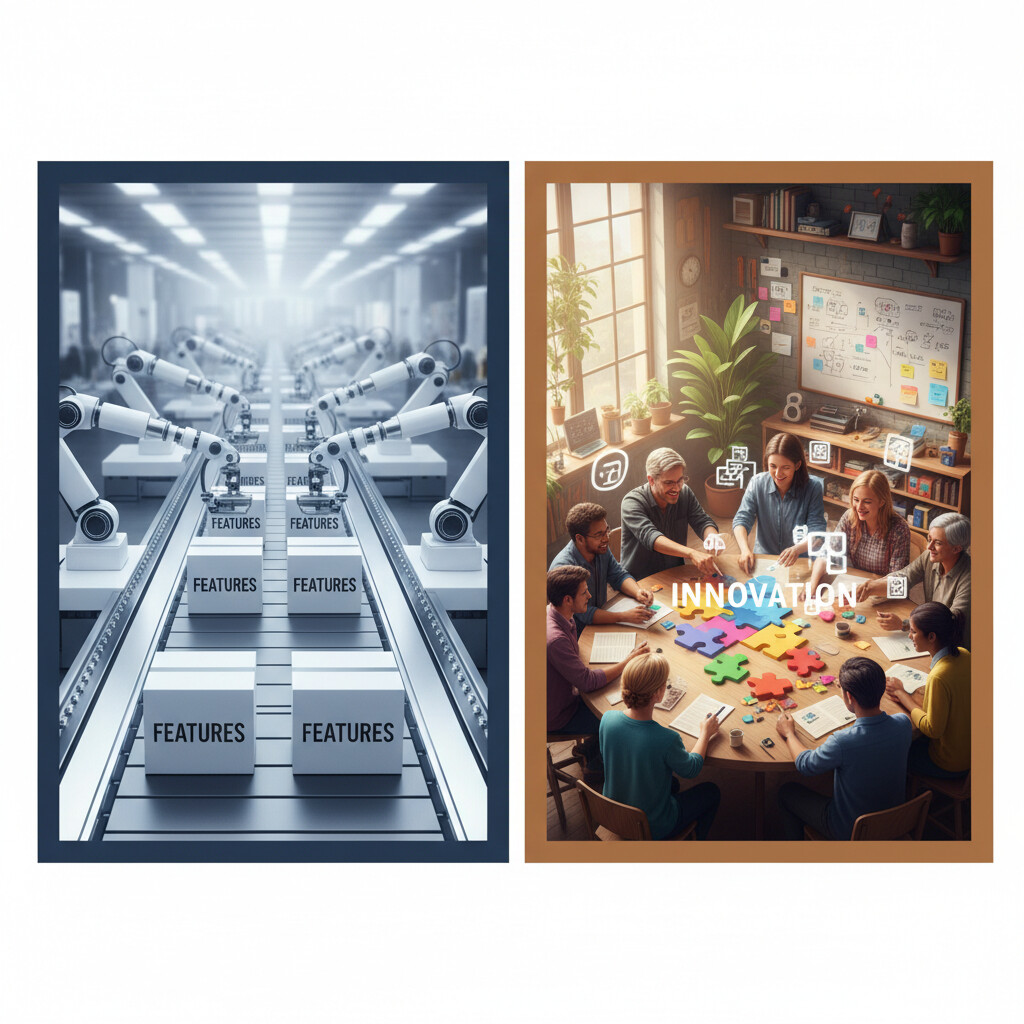
We’ve all been there. You spend weeks aligning stakeholders, crunching the data, and crafting that perfect, visually stunning quarterly roadmap. It feels like a masterpiece of strategic clarity. But a month later, reality hits. Engineering is bogged down, a key assumption is invalidated by user feedback, and suddenly your beautiful plan feels more like a prison than a guide.
This is a classic tension in modern product development. We adopt agile ceremonies, but our reliance on fixed, feature-based roadmaps can accidentally create a ‘waterfall-in-disguise.’ The team ends up racing to ship pre-defined outputs, turning sprints into a frantic checklist rather than a cycle of learning and iteration. True agility isn’t just about stand-ups and retros; it’s about having the flexibility to respond to what you discover along the way.
To break this cycle, the roadmap must evolve from a static list of features to a dynamic guide focused on outcomes. When discovery work and user feedback are continuously integrated with your development cycle, you empower your team to solve the right problems. At https://leera.io, we believe that tightening the loop between feedback and execution is key to building products that truly resonate.
So, how do you balance the need for a strategic, forward-looking roadmap with the day-to-day flexibility required for true agile development?