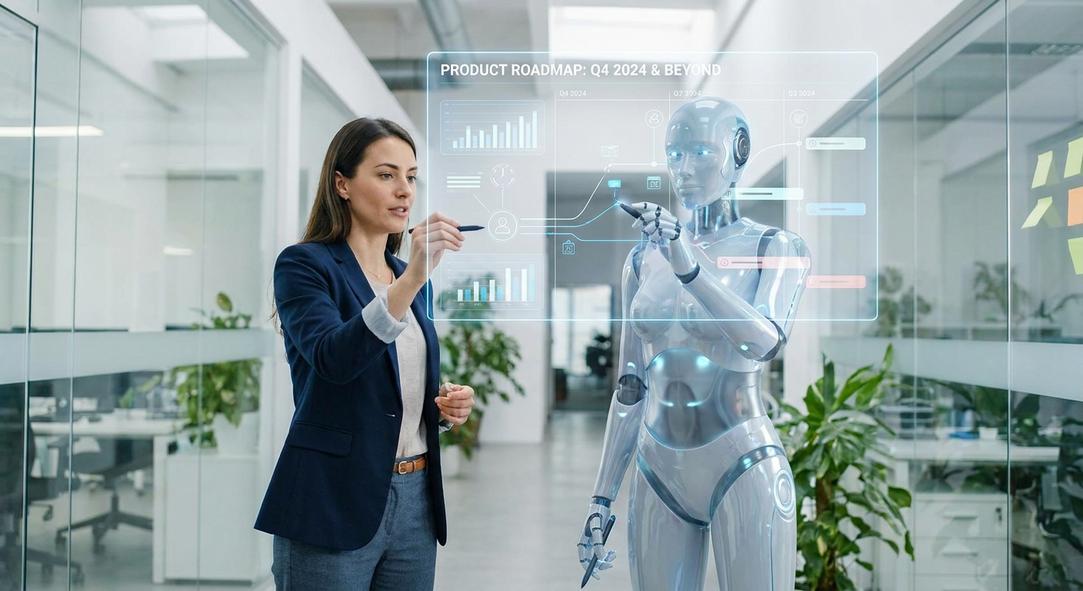
We’ve all gotten used to leveraging AI as a super-powered assistant. It’s great for summarizing user research, drafting user stories, and analyzing data. But the conversation is rapidly shifting from AI as a tool to AI as a true product-building partner.
Recent advancements, like agentic AI systems that can take a high-level prompt and independently plan, code, and debug an entire feature, are pushing this frontier. This isn’t just about making our existing workflows more efficient; it’s a fundamental change in how products might be built.
If an AI can take a goal, analyze the market, define the specs, and iterate on a solution with minimal human intervention, what is the PM’s new core value proposition? Our role has always been about navigating ambiguity and being the “human” glue between users, business, and tech. Does that role now become more focused on setting the perfect high-level “prompt” or vision? Does it shift entirely to ethics, taste, and complex stakeholder diplomacy—the things an AI can’t easily replicate?
This evolution could free us from tactical execution to focus on higher-level strategy, but it also demands a new set of skills. We’re moving from managing backlogs to managing intelligent systems.
How do you see the core responsibilities of a Product Manager evolving in a world where AI can independently build and iterate on features?