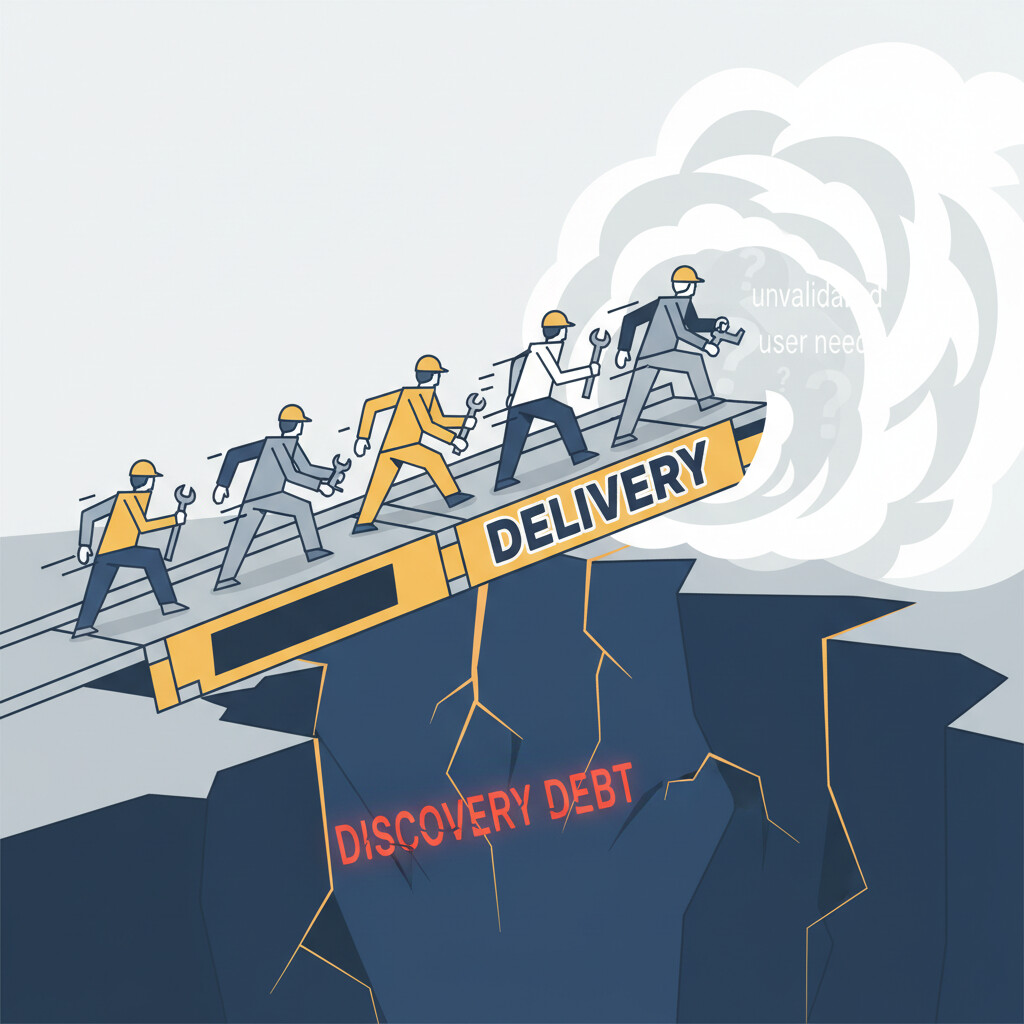
We’re all familiar with the concept of ‘tech debt’—the implied cost of rework caused by choosing an easy (limited) solution now instead of using a better approach that would take longer. But I’ve been seeing more teams accumulate a different, perhaps more dangerous, kind of liability: ‘Discovery Debt.’
This is the cost of not doing enough user research, market analysis, and solution validation before jumping into the build cycle. In the rush to increase velocity and hit quarterly targets, it’s tempting to skip the ‘why’ and focus on the ‘what.’ We prioritize shipping features over validating problems, creating a backlog of unvalidated assumptions that quietly compound.
The result? We build beautifully engineered products that nobody wants. We waste cycles on features that don’t move the needle and create a bloated product that’s hard to maintain and harder to sell. The pressure to ‘just ship it’ is immense, but the long-term cost of shipping the wrong thing is far greater.
To counteract this, we need to treat discovery as a continuous, integral part of development, not a preliminary phase. Integrating systems that constantly surface user insights and connect them to roadmap decisions, like the AI-powered feedback analysis we use at Leera.io, can help ‘pay down’ this debt before it cripples your product.
How does your team balance the immense pressure to deliver quickly with the critical need for meaningful discovery?