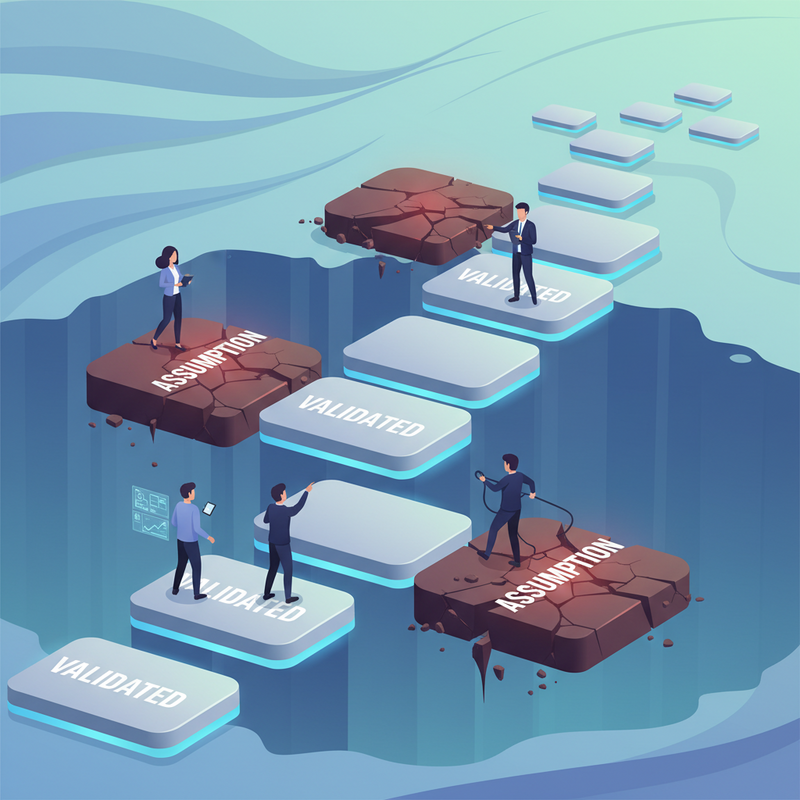
We’ve all felt the pressure to keep the ‘feature factory’ running. We prioritize, we build, we ship. But how often do we launch something that lands with a fizzle instead of a bang? The uncomfortable truth is that many features fail to deliver real value because they’re built on unverified assumptions.
A powerful mental model is to treat your entire roadmap not as a to-do list, but as a portfolio of risks to be mitigated. The biggest risk usually isn’t technical feasibility (‘can we build it?’), but customer value (‘should we build it?’). Before a single line of code is written, our primary job is to de-risk the core assumptions behind an idea through rapid, low-fidelity validation—customer interviews, prototypes, and landing page tests.
This shift from ‘building features’ to ‘testing hypotheses’ saves countless engineering hours and focuses the entire team on delivering outcomes, not just outputs. Systematizing this process requires a tight feedback loop where customer insights directly inform your discovery process. Tools that help centralize and analyze user feedback, like those we’re developing at https://leera.io, are essential for connecting customer problems to de-risked solutions.
This isn’t about slowing down; it’s about building the right things faster.
What specific, low-cost methods does your team use to de-risk ideas before committing engineering resources?