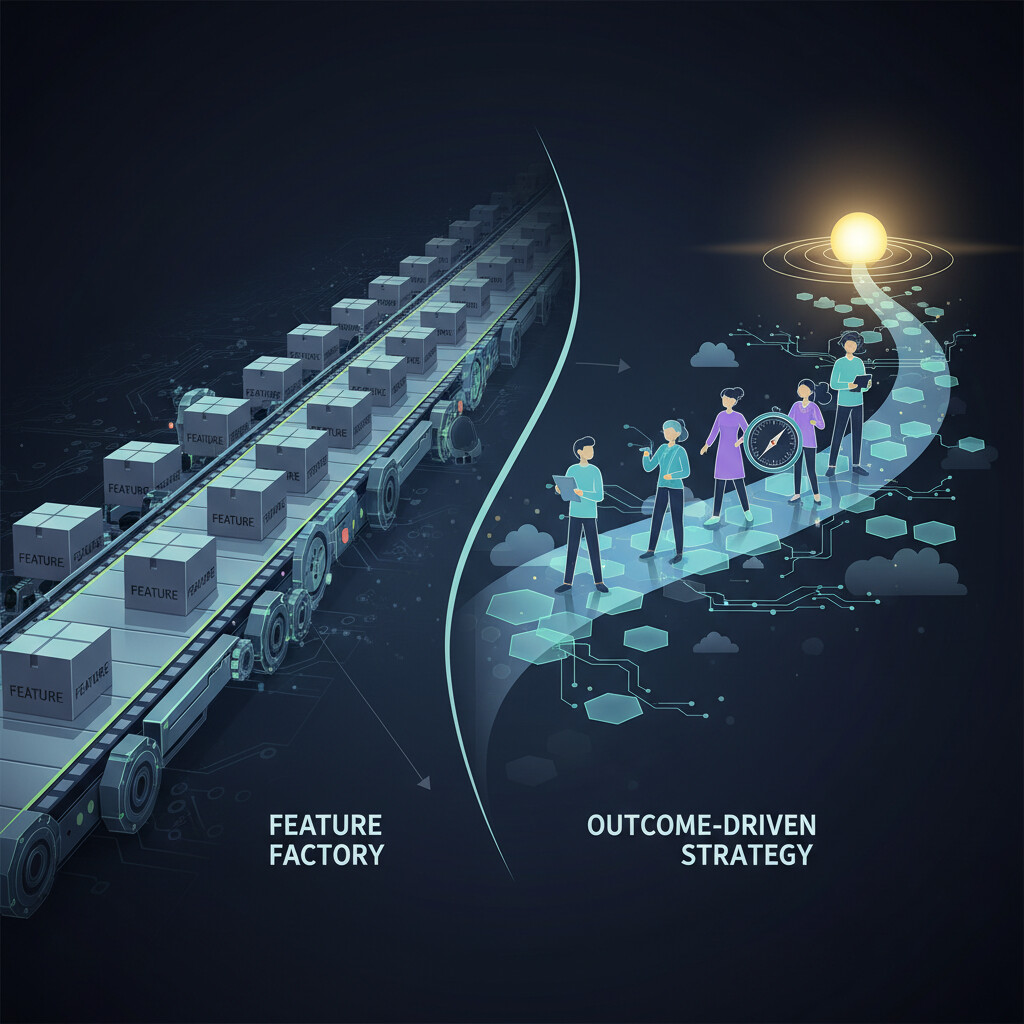
It’s a classic product management dilemma: your leadership wants a detailed, feature-based roadmap for the next 12 months, but your team knows that true agility means responding to change. Too often, the roadmap becomes a rigid Gantt chart—a feature factory assembly line—rather than a statement of strategic intent.
This is where the shift from output-focused to outcome-driven roadmapping becomes critical. Instead of listing features like ‘Implement new dashboard,’ a strategic roadmap focuses on goals like ‘Reduce user onboarding time by 30%.’ This approach empowers your engineering team to solve the problem, rather than just build a pre-defined solution. It aligns everyone on the ‘why’ behind the work, fostering innovation and true cross-functional collaboration.
Connecting day-to-day development work back to these strategic outcomes is the hardest part. Without the right tools, engineering efforts can become disconnected from the company’s goals. Platforms like https://leera.io are designed to bridge this exact gap, ensuring that the work being done in Jira directly supports the key results you’re aiming for.
Ultimately, a roadmap should be a guide, not a gospel. It should communicate direction and priorities while leaving room for discovery and learning.