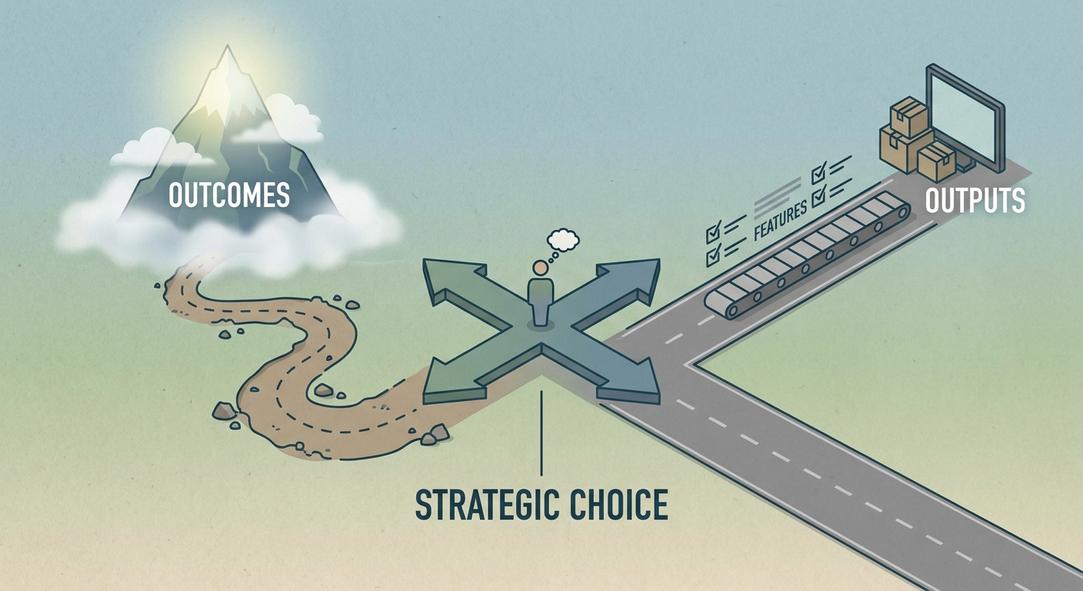
We’ve all been there. You spend weeks crafting a beautiful, outcome-based strategy focused on goals like “Increase user activation by 15%.” The team is aligned, the vision is clear, and you’re excited to solve real user problems. Then, you present your quarterly roadmap, and the first question from leadership is, “Great, but what exact features can we promise sales for the end of Q3?”
This is the central paradox for many product managers today. Our industry preaches the gospel of focusing on outcomes, but our organizations still run on the reliable, predictable drug of feature outputs. This isn’t just a semantic debate; it’s a deep-seated conflict that creates friction. It pushes teams toward becoming a “feature factory,” where success is measured by velocity and shipping stuff rather than moving the needle on what actually matters. This pressure forces us to commit to solutions prematurely and kills the agility needed to respond to what we learn from user research.
We’re tasked with navigating this ambiguity, balancing the business’s need for predictability with our mission to deliver genuine value. How do you manage this in the real world?
What are your most effective strategies for communicating an outcome-based roadmap to stakeholders who still think in terms of features and timelines?