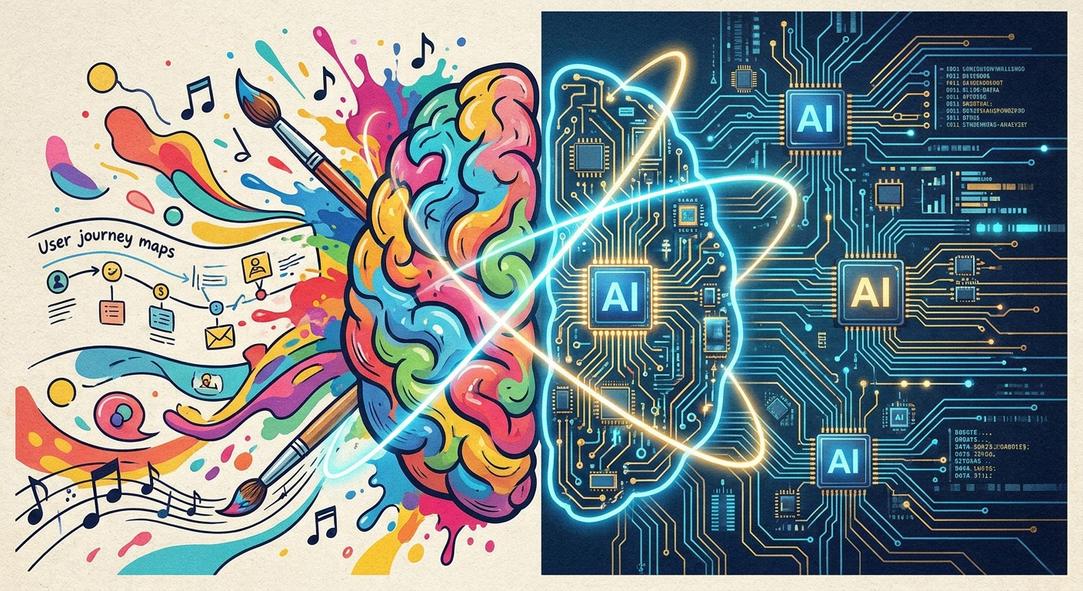
For years, the dominant narrative has been that a great Product Manager is the “voice of the customer,” focusing on empathy, user research, and market needs above all else. Technical literacy was a bonus, but deep engineering expertise was often seen as secondary to user-centricity. I’m seeing a significant shift in this thinking, accelerated by the rise of AI.
Building truly innovative products today, especially those leveraging complex models or novel data architectures, requires more than just translating user stories. The strategic choices about what to build are now inseparable from the architectural decisions of how to build it. PMs who can’t hold their own in deep technical discussions with their engineering counterparts risk being sidelined, unable to grasp the true opportunities and constraints of the technology. They can’t effectively challenge assumptions or co-create solutions.
This isn’t about PMs needing to write code. It’s about a deeper fluency in system design, data pipelines, and algorithmic possibilities. Without it, are we just managing a backlog, or are we truly managing a product? The era of the “technical translator” PM might be over, making way for the “technical strategist.”
What’s your take? Are you seeing a greater demand for technical depth in PM roles at your organization, and how are you adapting your skills to stay ahead of this curve?