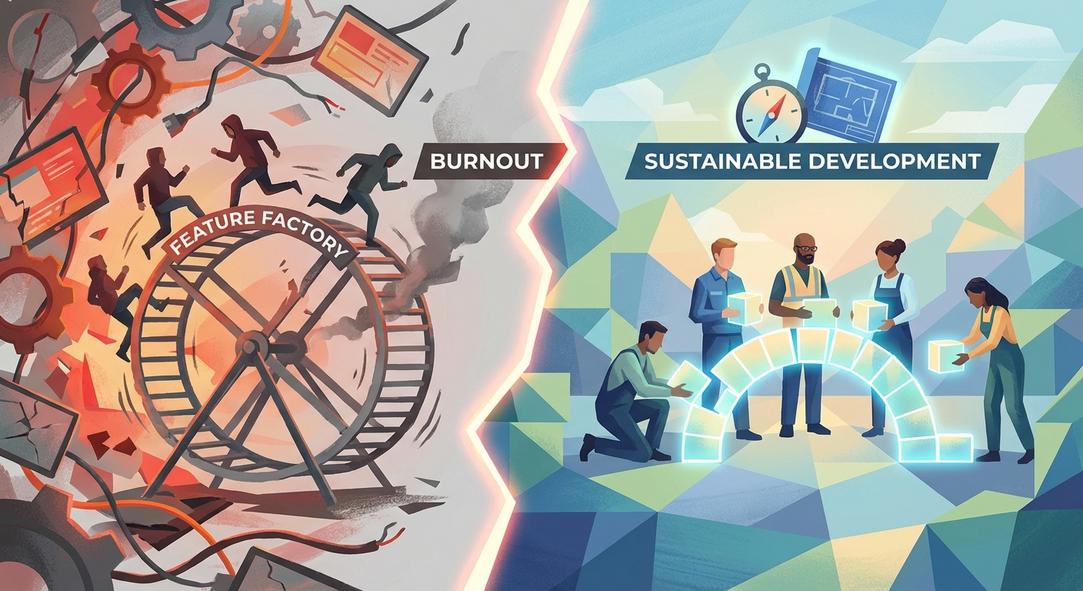
We’re all drilled in the ‘move fast and break things’ mantra. For early-stage startups searching for product-market fit, it’s gospel. But what happens after you’ve found it? I’m seeing a growing conversation around the high cost of a relentless focus on speed: mounting tech debt, team burnout, and a backlog full of features that don’t actually move the needle.
This isn’t a call for laziness. It’s a call for a more mature approach to velocity. ‘Slowing down’ strategically means investing in the things that enable sustainable speed later. It’s about carving out time for deep user research instead of just validating assumptions. It’s about giving engineering the space to refactor a critical service or improve CI/CD pipelines. It’s about debating a feature’s ‘why’ for an extra week to ensure it aligns perfectly with our strategy.
This deliberate pace feels counterintuitive, especially when stakeholders are demanding new features. But by fixing the leaky buckets of our processes and architecture, we build a foundation for faster, more impactful delivery in the long run. It’s a shift from measuring activity to measuring outcomes.
How do you balance the pressure for immediate feature delivery with the long-term need to invest in your product’s foundations and team health?