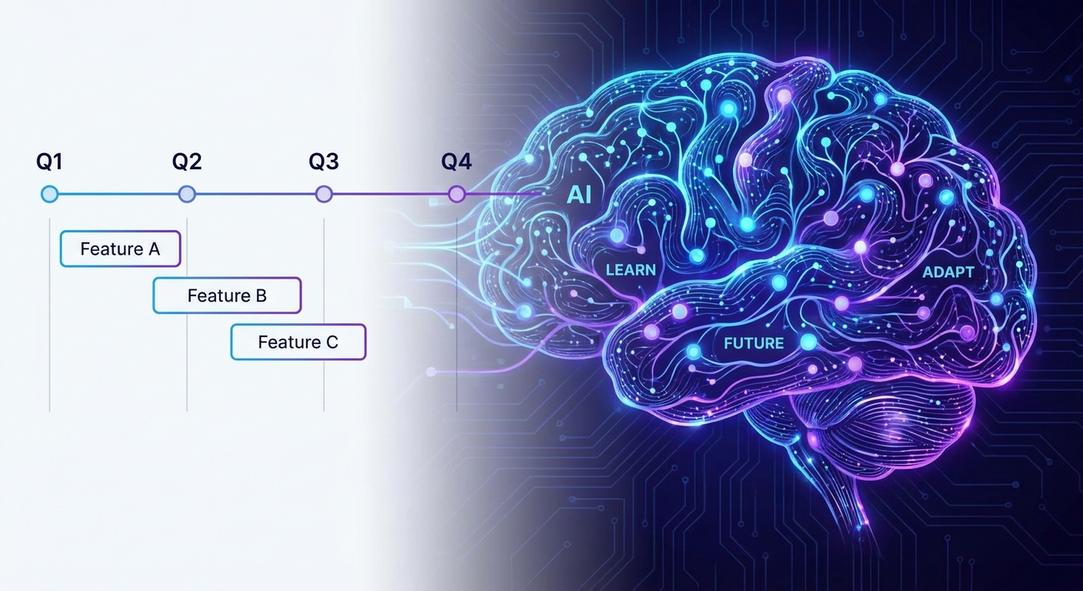
It feels like every product roadmap now has a mandate: ‘add more AI.’ But a lot of what we’re seeing is what I’d call ‘AI-as-a-feature’—bolting on a smart summary or a recommendation engine to an existing product. The real sea change, however, is the rise of the ‘AI-native’ product.
This isn’t just about adding features; it’s about building products where the core value proposition and user experience are fundamentally enabled by AI. Think of products where the user journey is non-deterministic and the interface learns and adapts. This shift breaks traditional product management playbooks.
Our neat, feature-based roadmaps become less relevant. How do you roadmap for a model’s ‘capability’ or ‘accuracy’ instead of a button that does X? User research also gets tricky. How do you conduct usability testing on a product that gives different answers every time? This requires a much deeper partnership between product, data science, and engineering, forcing PMs to become more technically literate in the nuances of machine learning models.
It’s a huge mindset shift from managing a predictable system to guiding a learning one.
How are you adapting your roadmapping and user research processes for products where the core experience is driven by AI, rather than just augmented by it?