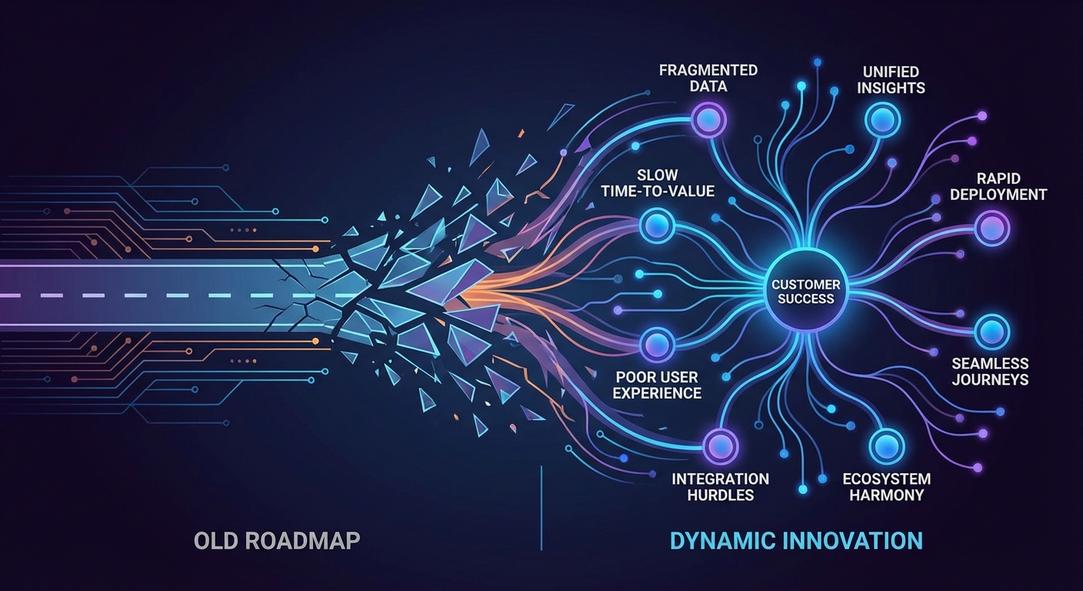
For years, the feature-based, timeline-driven roadmap has been a staple of product management. It gives stakeholders a sense of predictability and a clear answer to ‘What are we getting and when?’ But let’s be honest, how often does that 12-month plan survive contact with reality? In today’s fast-moving market, locking ourselves into a rigid list of features can turn us into a feature factory, prioritizing output over actual outcomes. We risk building a beautifully planned product that misses the mark with users because we couldn’t adapt to new learnings. I’m seeing more and more teams shift towards outcome-oriented or thematic roadmaps. Instead of promising ‘Feature X by Q3,’ they’re committing to ‘Improve user activation by 15% in H2.’ This empowers teams to discover the best solution and gives them the flexibility to pivot based on research and data. It’s a move from being a project manager to a true product leader. However, this shift requires a massive cultural change, especially with leadership and sales teams who are accustomed to date-based commitments.