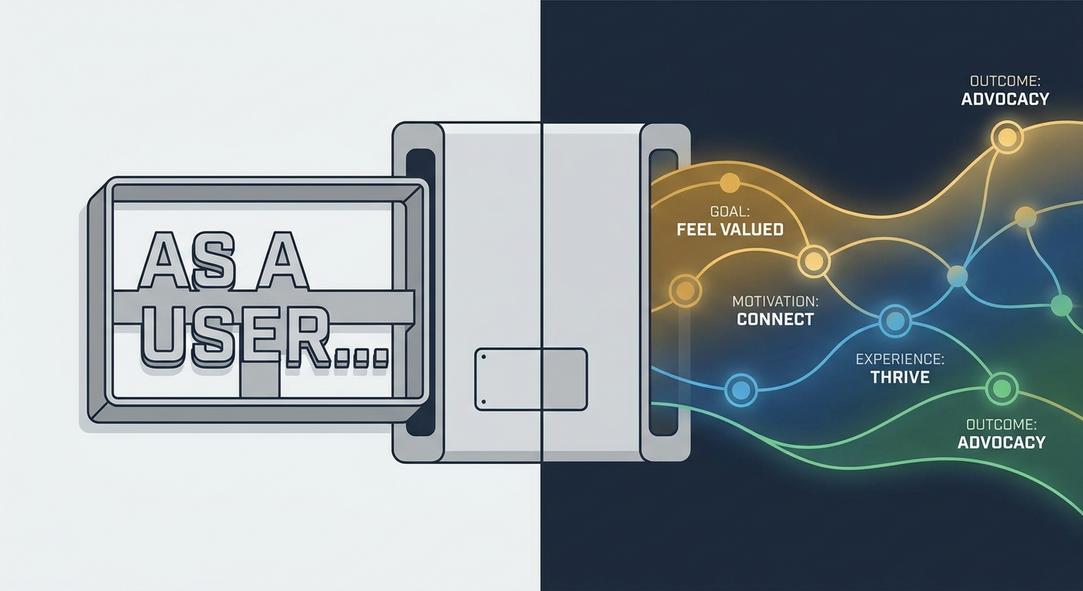
For years, the ‘As a user, I want to…’ format has been the bedrock of agile development. It’s simple, familiar, and universal. But let’s be honest, is it still serving us, or are we just going through the motions?
I’ve seen countless teams fall into the ‘user story trap,’ where stories become a checklist of outputs rather than a shared understanding of user needs. They often lack critical context about the user’s situation and motivation, turning our backlogs into a list of stakeholder ‘wants’ disguised in a user-centric format. This is how feature factories are born.
Lately, there’s been a growing movement towards alternatives that force a deeper focus on the ‘why.’ Frameworks like Jobs-to-be-Done (JTBD) and its ‘Job Story’ format (‘When , I want to , so I can ’) re-center the conversation on context and motivation, not just the action. This small semantic shift can have a massive impact, connecting every piece of work directly to a user’s struggle and a desired outcome. It moves us from building features to solving problems.
It’s a subtle but powerful evolution from ‘what’ the user wants to ‘why’ they need it in the first place, ensuring our roadmaps are driven by impact, not just activity.
So, how is your team navigating this? Are you still finding value in the traditional user story format, or have you evolved your approach to better capture user motivation and drive outcomes?