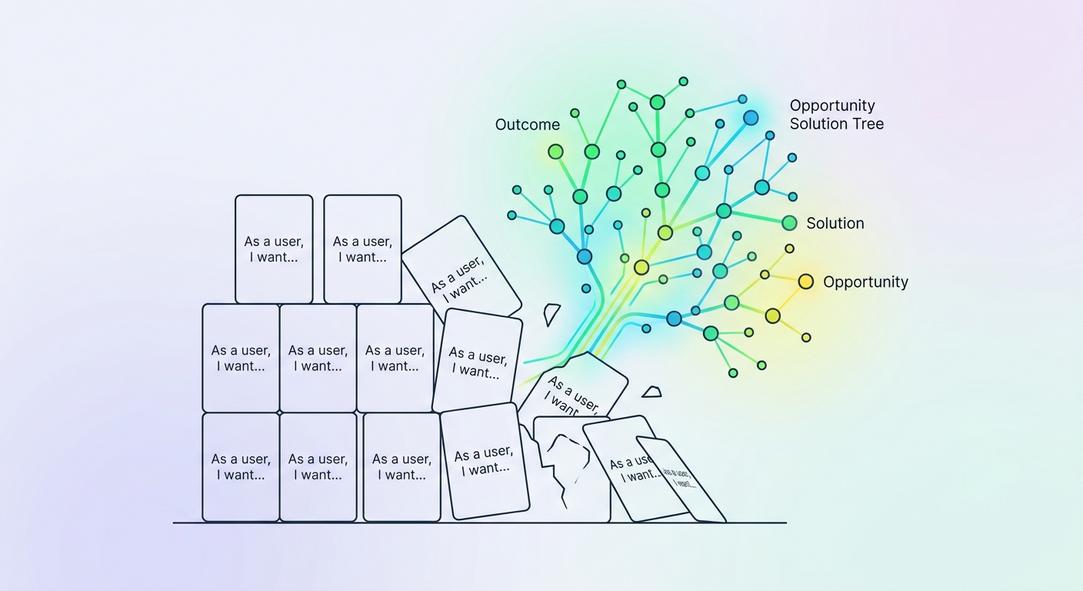
For years, the user story has been a cornerstone of agile development. We’ve all written hundreds of them: ‘As a [user], I want [feature], so that [benefit].’ It’s a simple tool that brought user-centricity to the forefront. But is it still serving us, or is it holding us back?
Lately, I’ve seen more teams hitting the limits of the user story format. It can inadvertently push us into a ‘feature factory’ mindset, where the focus is on shipping tickets rather than solving real customer problems. The ‘so that’ clause, arguably the most important part, often becomes an afterthought.
The discussion is shifting towards more outcome-driven frameworks like Jobs-to-be-Done (JTBD) or Opportunity Solution Trees. These methods force us to anchor every piece of work in a well-understood customer need or a desired outcome, giving cross-functional teams the autonomy to find the best solution. It’s a subtle but powerful move from defining outputs to defining outcomes, ensuring we’re always building what truly matters.
Have you found user stories becoming a checklist for features rather than a tool for genuine discovery?