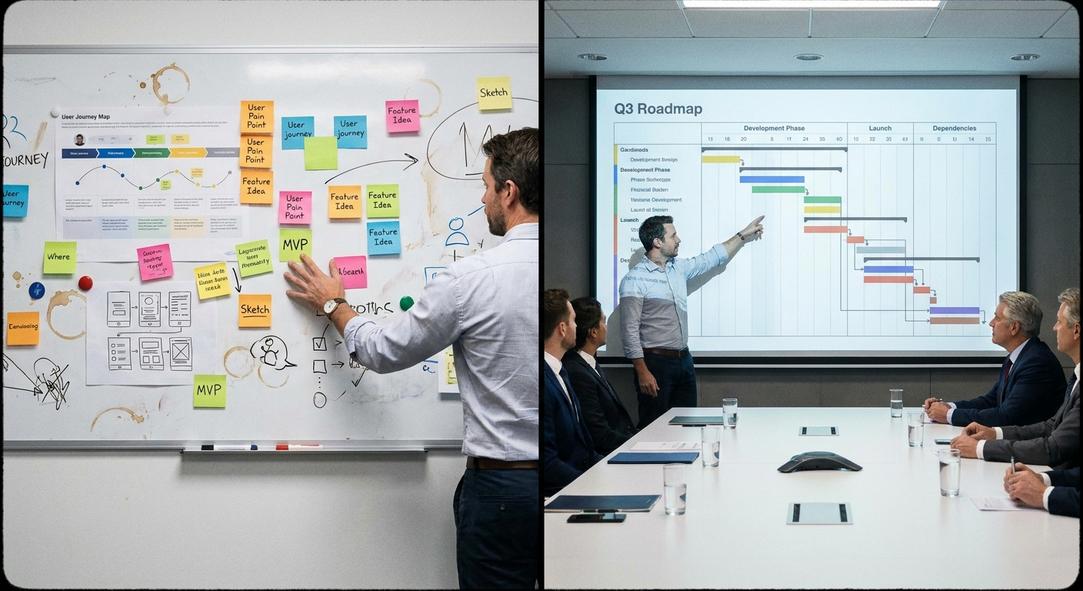
We’ve all been there. We champion continuous discovery, preaching the value of iterating based on user feedback. Then, a stakeholder from sales or marketing asks for the 18-month roadmap, complete with feature-level commitments. The two worlds collide.
This tension often leads to ‘discovery theater’—we go through the motions of user research, but the insights have little impact on the pre-approved plan. The alternative is a roadmap that’s pure fiction, creating a credibility gap with the rest of the business.
How do we break this cycle? The key is to reframe the roadmap not as a Gantt chart of features, but as a strategic communication tool that reflects our current level of confidence. For the next quarter, we can have high-fidelity feature goals. For the quarter after, we commit to solving specific user problems, leaving the solution flexible. Beyond that, we outline broad strategic themes.
This tiered approach provides the business with the predictability it needs for planning, while giving the product team the autonomy to let discovery genuinely guide development. It aligns the entire organization around outcomes over output.
How does your team navigate the pressure for long-term predictability while staying truly agile and responsive to user needs?