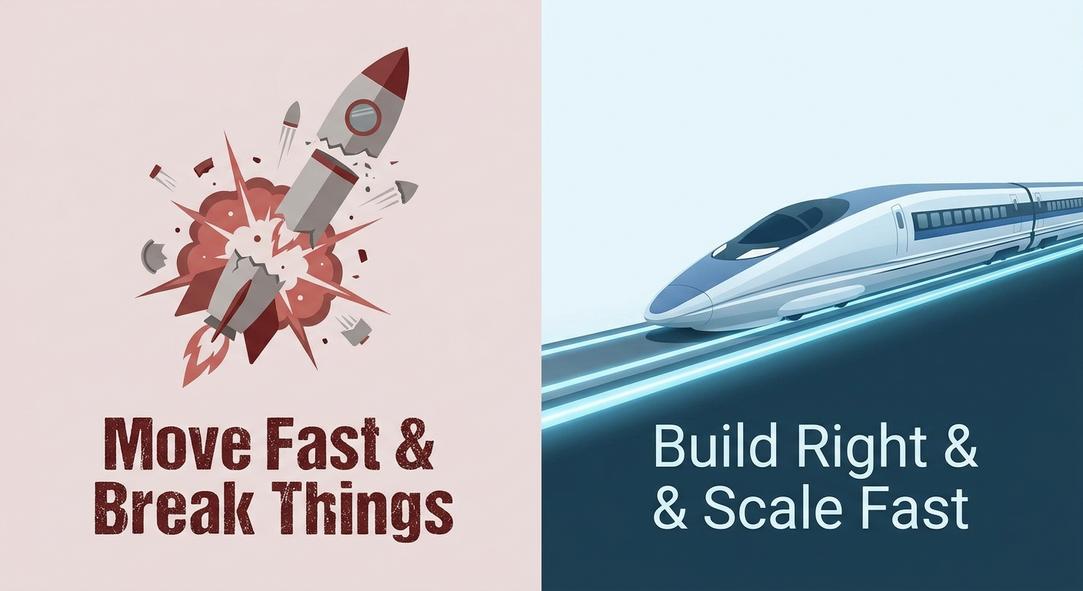
We all came up on the mantra ‘Move Fast and Break Things.’ It’s the gospel of the startup world, credited with building empires. For getting from zero to one, it’s undeniably powerful. But what happens when you’re at one hundred? Or one thousand?
Lately, I’m seeing more engineering leaders and product thinkers argue that for mature products, this philosophy becomes a liability. Constant ‘breaking’ isn’t innovation; it’s a tax on your customers’ trust and your engineers’ morale. Every broken thing is an emergency P0 ticket, a context switch, and a drain on the capacity you need for actual innovation. This isn’t just an engineering problem—it’s a product strategy problem. Prioritizing platform stability, reducing tech debt, and investing in developer experience can feel like you’re slowing down, but it might be the only way to build a foundation for sustainable, long-term speed. It’s about shifting from raw velocity to effective velocity.
As PMs, we own the ‘what’ and the ‘why,’ and we have a huge influence on the ‘how.’ We’re the ones who can champion for a portion of the roadmap to be dedicated to this foundational work.
So, how do you balance the pressure for new features with the critical need for stability and quality? What language do you use to sell ‘slowing down to speed up’ to your stakeholders?