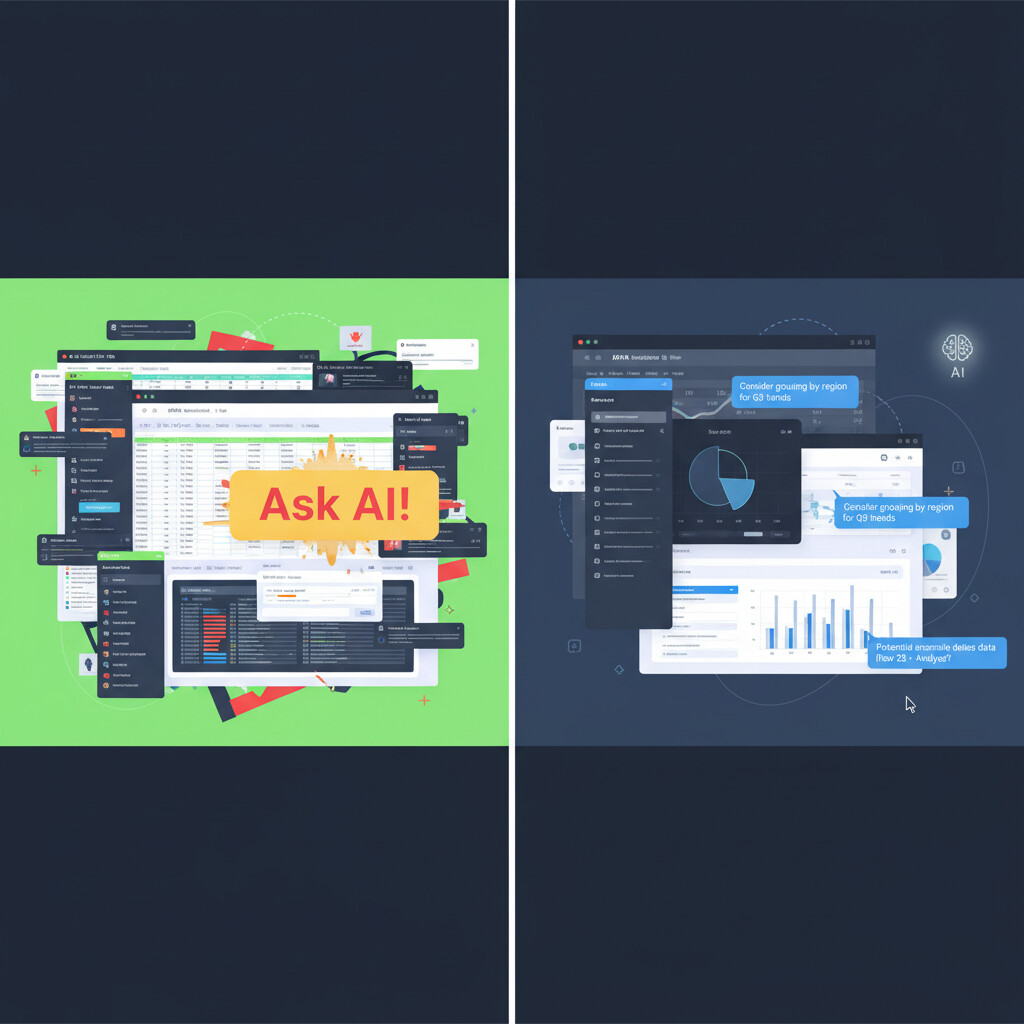
It seems every product on the market has suddenly been ‘supercharged with AI.’ From summarization wizards to chatbots, the pressure to ship something with an AI label is immense. But this rush raises a critical question: are we bolting on AI features, or are we fundamentally rethinking user workflows?
There’s a massive difference between an ‘AI-powered’ feature and an AI-native product. The first is often a superficial layer—a quick win that adds a capability without changing the core experience. The second reimagines the user’s entire journey, using AI to automate toil, provide proactive insights, and create a truly intelligent, adaptive experience.
Falling into the feature trap leads to a disjointed product and, worse, distracts us from solving the user’s actual, underlying problem. We risk building a faster horse when our users are ready for a car. To avoid this, we need to anchor our AI strategy in deep user understanding. What core friction can AI uniquely solve? How can it change the entire workflow, not just one step? Staying close to user feedback is key, and it’s why continuous discovery and synthesis (where platforms like https://leera.io are invaluable) have become more critical than ever.
So, how is your team navigating this? Are you focused on shipping distinct AI features, or are you pursuing a more foundational, workflow-integrated AI strategy?