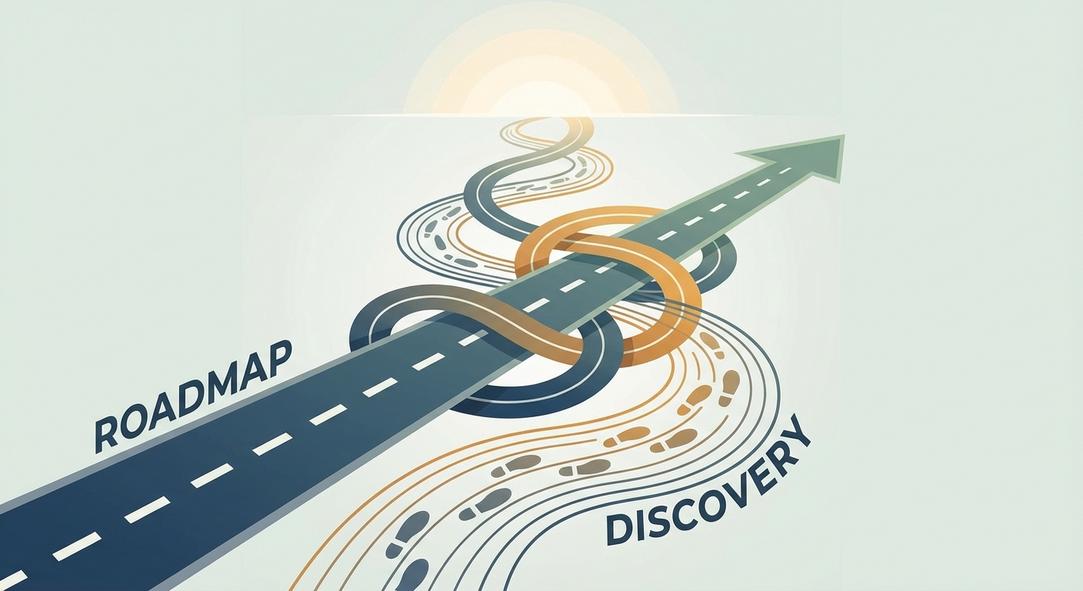
We’ve all been told that continuous discovery is the holy grail of modern product management. The idea of constantly learning from our users is powerful. But let’s be honest: are our discovery efforts actually informing our strategy, or are they just creating a backlog of unvalidated ideas and stakeholder whiplash?
There’s a growing tension between the theory of ‘always-on’ discovery and the practical need for a stable, long-term roadmap. While the discovery track uncovers a constant stream of new opportunities, the broader business needs predictability to plan sales, marketing, and budgets. When discovery runs completely independently from strategic planning, it can lead to a disconnect where research findings feel more like a distraction than a guidepost. The goal isn’t just to learn; it’s to learn things that help us make better strategic bets.
This isn’t about abandoning discovery. It’s about integrating it. The real challenge is creating a system where insights from user research systematically influence and validate our strategic direction, rather than constantly derailing it. This is the key difference between reactive feature-chasing based on the latest user interview and true, strategy-led product development.
How do you balance the need for a stable, long-term strategic roadmap with the valuable, but often unpredictable, insights that come from continuous discovery?