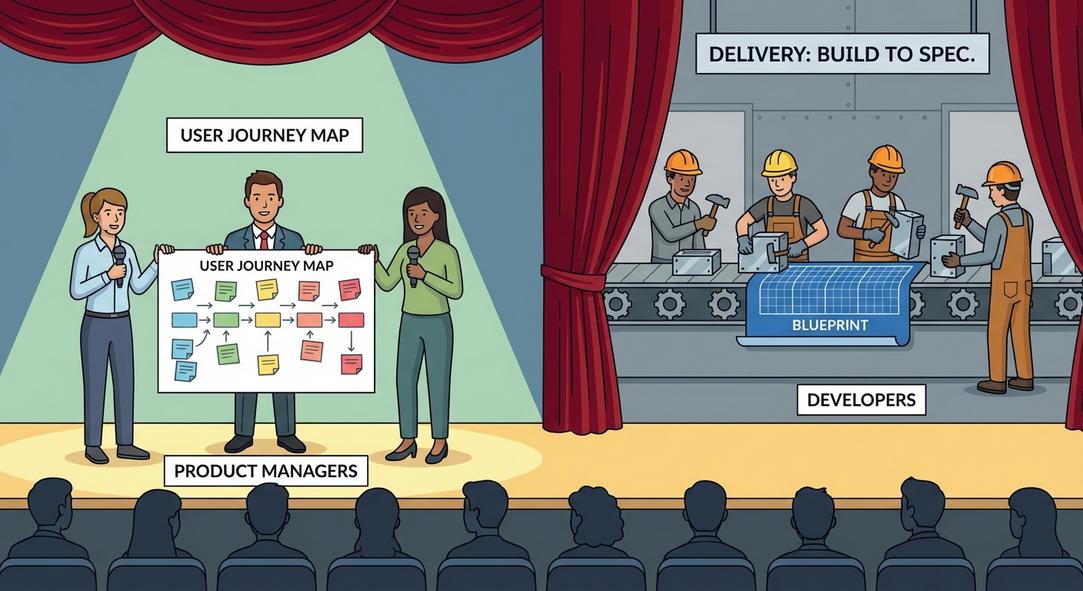
We all champion ‘continuous discovery’ as a core tenet of modern product management. We know we should be talking to users constantly, testing assumptions, and iterating based on what we learn. But let’s be honest, how often does that ‘continuous’ process get relegated to a ‘Discovery Sprint’ or a time-boxed phase at the beginning of a project?
This is what I call ‘Discovery Theatre.’ It’s when we perform the rituals of discovery—interviews, mapping, prototyping—but the outcomes don’t truly and continuously influence the development cycle. Instead, discovery becomes a perfunctory, one-off activity to justify a pre-determined roadmap. We check the box and then revert to being a feature factory, working off assumptions that quickly become stale. This creates a dangerous gap between learning and building, leading to wasted effort and products that miss the mark.
The pressure for delivery is real, and it’s often easier to show progress through output than through validated learning. But mistaking the performance of discovery for the real thing is a trap that keeps us from building truly great products.
So, how do you and your teams break the cycle of ‘Discovery Theatre’? What practical tactics have you used to weave genuine, continuous learning into your delivery rhythm?