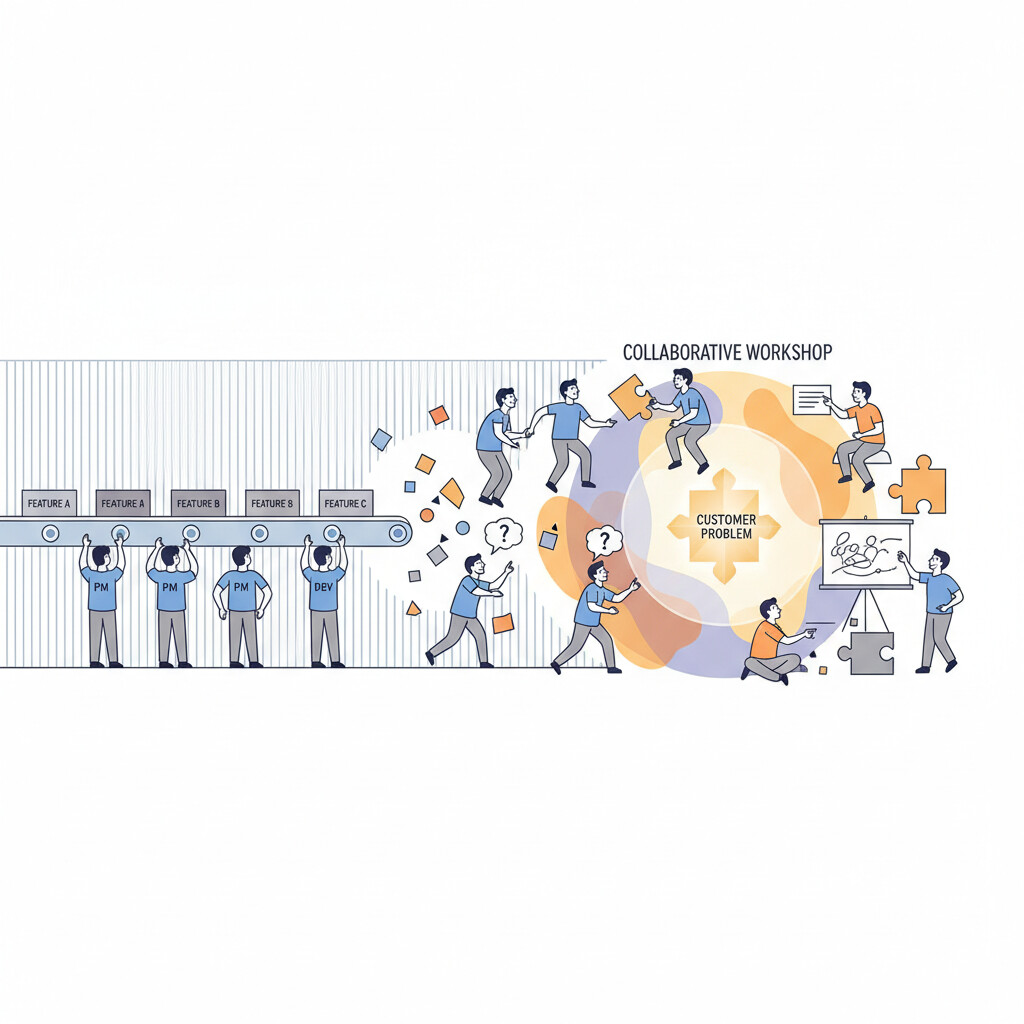
The classic user story format, “As a [user], I want [feature], so that [benefit],” has been a cornerstone of agile development for years. But let’s be honest, how often does it become a glorified to-do list? We get so focused on the ‘what’ that we lose sight of the ‘why,’ and our backlogs become a conveyor belt of features rather than a strategic tool for solving real problems.
This is where the shift from outputs to outcomes becomes critical. Instead of just documenting a requested feature, the focus is moving toward defining the underlying ‘Job to be Done’ or the core customer problem. When a team deeply understands the problem, they have the autonomy and context to devise the best solution, which might not be the feature originally requested.
To do this effectively, you need a powerful way to synthesize customer feedback, interview notes, and support tickets to find those core problems. Centralizing insights in a repository (like we’re building at https://leera.io) is no longer a nice-to-have; it’s essential for moving beyond the feature factory. By focusing on the problem space first, we empower our teams to innovate and ensure we’re building products that truly matter.
How has your team evolved its approach to user stories to stay focused on customer outcomes rather than just shipping features?