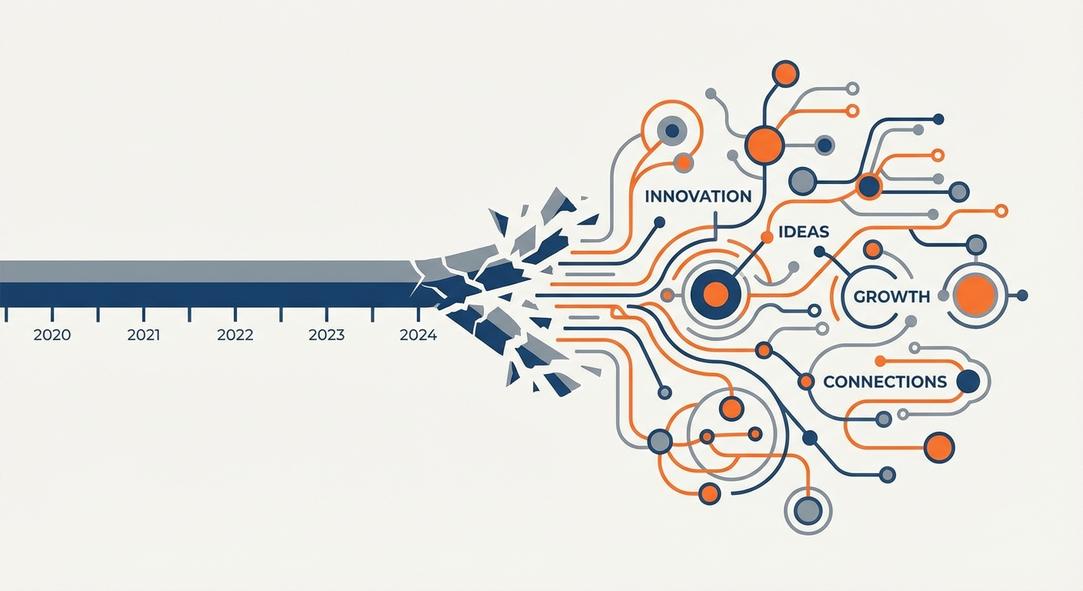
For years, we’ve treated the product roadmap as a sacred document—a Gantt chart sent from the heavens to promise stakeholders exactly what feature will ship and when. But let’s be honest, how often does that model actually survive contact with reality? More often than not, it chains us to a feature factory model, measuring success by output, not impact.
The conversation is shifting, and for the better. I’m seeing more teams ditching the timeline-based roadmap for theme-based or outcome-oriented approaches. Instead of committing to a list of features for Q3, they’re committing to solving a specific customer problem, like ‘Reduce user onboarding friction’ or ‘Increase new user activation by 15%.’
This isn’t just semantics; it’s a fundamental change in how we operate. It gives engineering and design the autonomy to find the best solution, empowers the team to pivot based on research, and aligns everyone on the ‘why’ behind the work. It transforms the roadmap from a rigid project plan into a true strategic communication tool that reflects uncertainty and focuses on learning.
It’s a massive improvement, but it’s not easy. It requires a huge amount of trust from leadership and a new way of communicating progress.
So, how is your team navigating this shift? What’s the single biggest hurdle you’ve faced when moving from an output-based roadmap to an outcome-driven one?