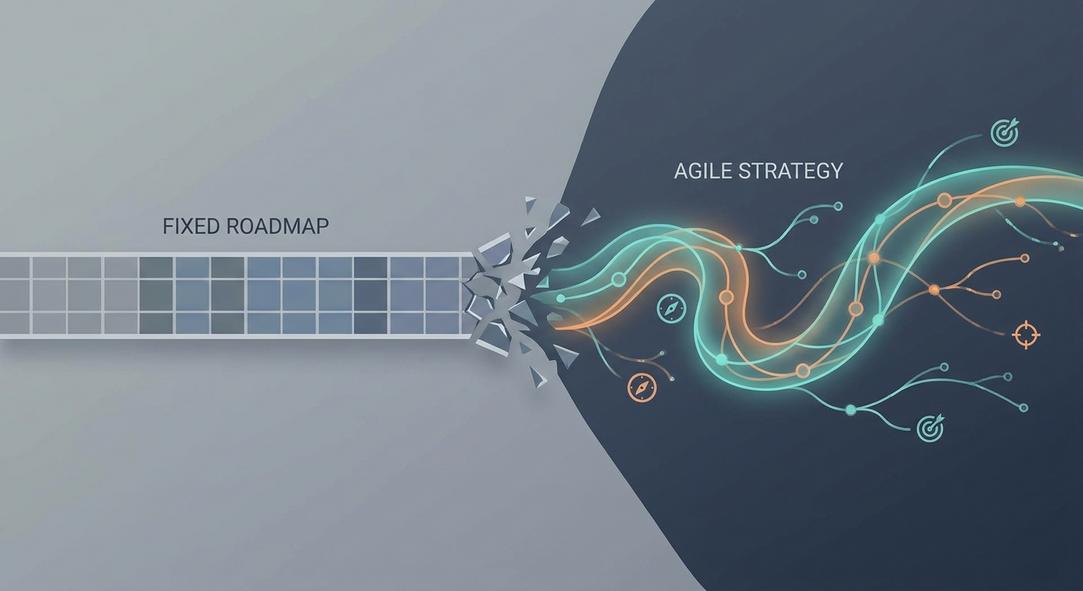
We’ve all been there: a beautifully crafted, date-driven roadmap that’s obsolete the moment a key assumption is invalidated or a competitor makes a move. For years, we’ve talked about the “feature factory” problem, but it feels like the rubber is finally hitting the road.
I’m seeing a major push across the industry to ditch the “Gantt chart theater” for more dynamic, outcome-based plans. Instead of a list of features promised by Q3, these living documents focus on customer problems we aim to solve or business metrics we intend to move. The conversation shifts from “what we will build” to “what we will learn and achieve,” with initiatives framed as hypotheses to be tested rather than features to be shipped.
This approach aligns teams around a shared purpose and empowers them to find the best solutions. However, it requires a huge cultural shift, especially when dealing with leadership and sales teams who crave the false certainty of a fixed timeline. It fundamentally changes how we communicate progress and manage stakeholder expectations. True product-led growth can’t be scheduled on a calendar.
So, how are you balancing the need for strategic direction with the reality of agile development? Have you successfully moved your organization toward an outcome-based roadmap, and what were the biggest hurdles?