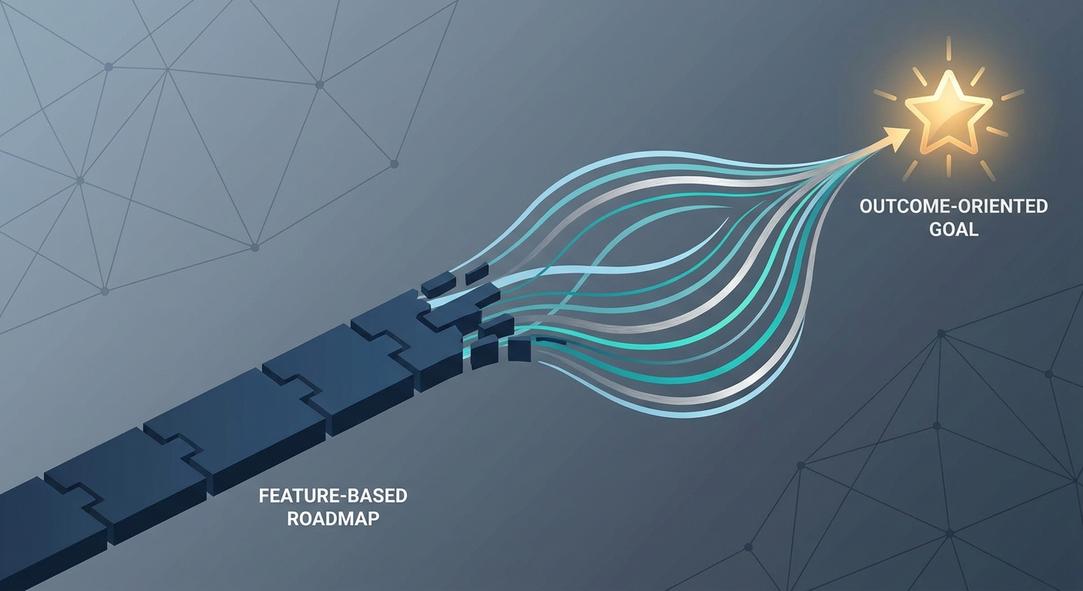
We’ve all been there: presenting a beautiful, detailed, time-based roadmap, only for it to become obsolete a month later. For years, we’ve talked about moving away from the “feature factory” model, but the pressure for predictability often keeps us locked into rigid timelines. Today, this isn’t just a philosophical debate; it’s a strategic necessity.
In a market that demands efficiency and demonstrable impact, clinging to a feature-based roadmap is a recipe for wasted effort. It encourages teams to prioritize shipping outputs over achieving outcomes. The conversation becomes “Is it done?” instead of “Did it work?”
This is why the shift to outcome-oriented roadmaps is so critical. Instead of promising a list of features by a certain date, we align everyone—from stakeholders to engineering—around solving specific customer problems and hitting business goals (e.g., “Increase activation rate by 15%” instead of “Ship new onboarding flow”). This approach builds true agility, empowers teams to find the best solutions, and ensures we’re always working on what truly matters. It changes the conversation from timelines to impact.
What has your experience been moving from an output-focused to an outcome-focused roadmap, and what challenges did you face in getting stakeholder buy-in?