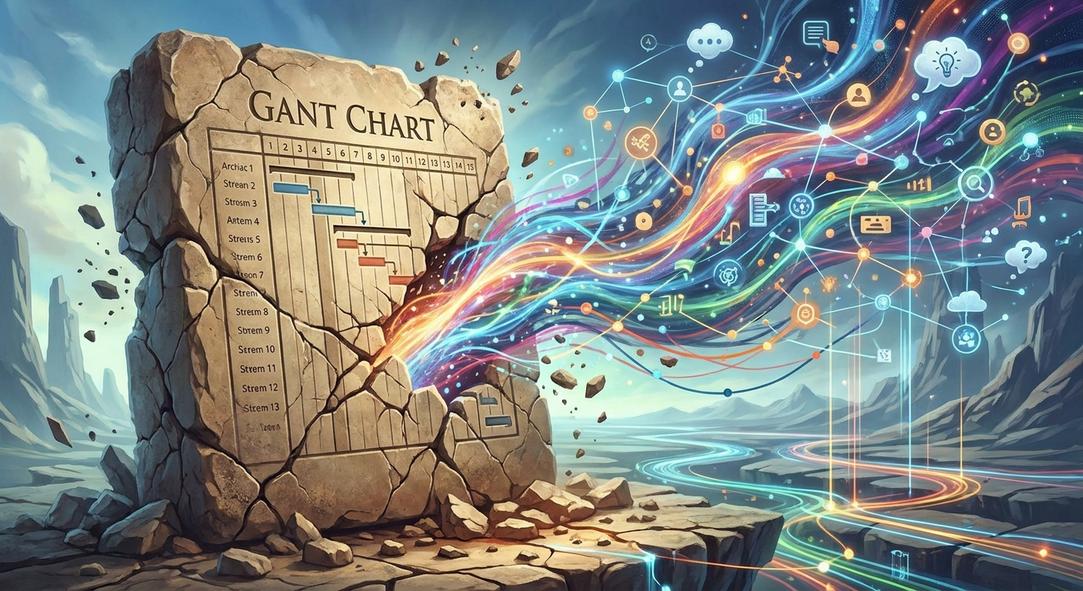
We’ve all been there: spending weeks crafting the ‘perfect’ 12-month roadmap, a beautiful Gantt chart filled with features and timelines, only to see it become irrelevant after the first quarter. For years, this was the standard playbook for communicating vision. But in an era of rapid iteration, AI-driven discovery, and constant market feedback, does this rigid, feature-based approach still serve us?
More teams are ditching these output-focused artifacts for dynamic, outcome-oriented frameworks like Now-Next-Later or OKR-driven themes. This isn’t just about changing a document; it’s a fundamental mindset shift. It moves the conversation from ‘When will X be done?’ to ‘What customer problem are we trying to solve and how will we measure success?’. It trades the illusion of certainty for genuine agility, empowering teams to find the best solutions rather than just shipping features. While stakeholders often crave the predictability of a timeline, these new methods force a healthier, more strategic dialogue about value and impact.
How has your organization evolved its approach to roadmapping, and what are the biggest hurdles you’ve faced in moving stakeholders away from old habits?