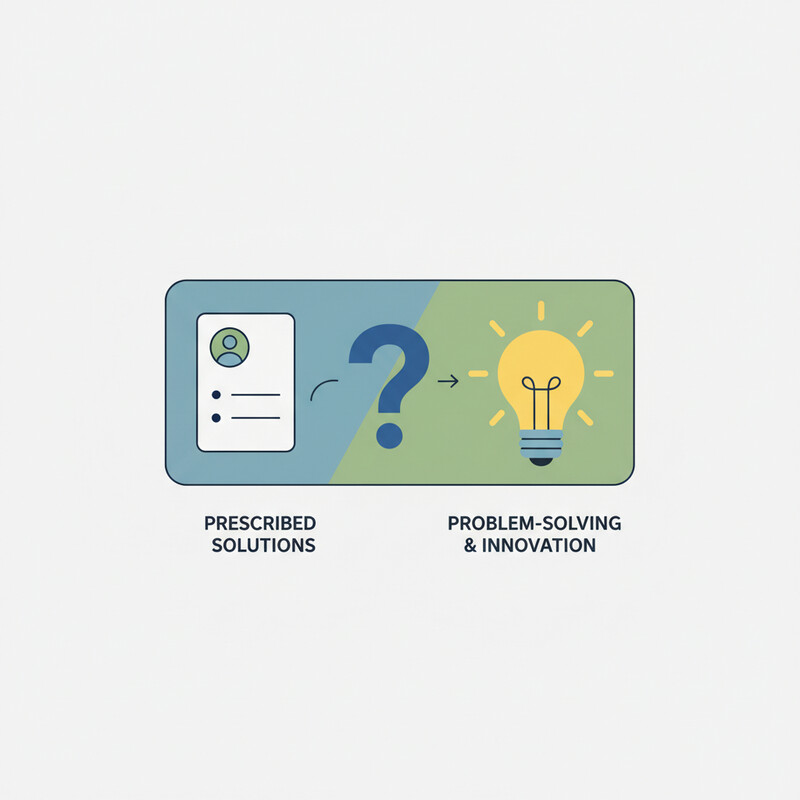
We’ve all written thousands of them: ‘As a [user type], I want to [action], so that I can [benefit].’ The user story has been the bedrock of agile development for years. But is it time we questioned its supremacy?
Too often, the user story format becomes a thinly veiled feature request. It boxes the team into a specific solution before the problem is truly understood, pushing us into a feature factory mindset. We get so focused on closing tickets that we lose sight of the ‘why’—the actual user problem we’re trying to solve and the outcome we want to achieve.
Lately, I’m seeing more high-performing teams shift their focus toward well-defined problem statements or Jobs-to-be-Done (JTBD). Instead of prescribing a solution, they frame the work around the user’s struggle and the desired outcome. This empowers design and engineering to explore creative, effective solutions rather than just building what’s on the ticket.
Making this shift requires a deep, shared understanding of your users’ needs, which can only come from centralizing and analyzing customer feedback effectively. At Leera (https://leera.io), we’re passionate about helping teams connect that raw user feedback directly to their product strategy, making the move to an outcome-driven mindset more seamless.
So, I’m curious: Has your team evolved its use of user stories? Are you experimenting with other formats, and what have the results been?