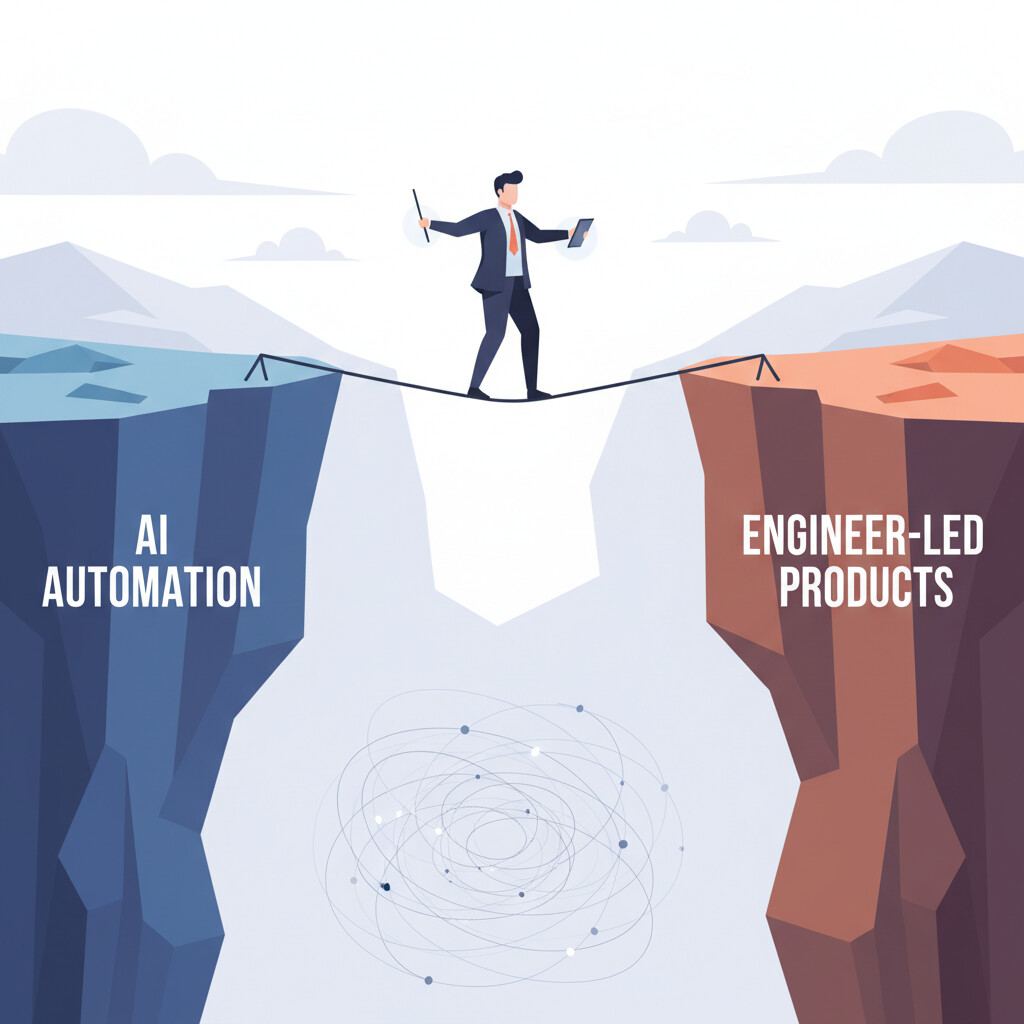
Lately, it feels like the walls are closing in on the product manager role. On one side, you have the rise of AI assistants capable of summarizing user feedback, writing first-draft user stories, and analyzing market data. On the other, there’s a renewed, and often valid, push for ‘engineering-led’ cultures where developers are encouraged to take more ownership of the product direction.
This puts PMs in a precarious position. If AI handles the tactical work and engineers drive the innovation, what’s left for us? The classic ‘CEO of the product’ mantra feels increasingly hollow. It seems our core value proposition is being fundamentally challenged.
I believe this is a critical moment to redefine our role away from being process managers and towards becoming true strategic connectors. Our irreplaceable value lies in deep customer empathy, navigating complex cross-functional politics, and ensuring the work is aligned with the highest-level business objectives. It’s about synthesizing disparate information—from sales calls to usability tests—into a coherent vision. Leveraging tools to streamline feedback and roadmap alignment, like those at https://leera.io, becomes less of a convenience and more of a core competency to prove our strategic worth. We need to be the signal in the noise.
How is your role changing in response to these pressures, and what skills do you think are now most critical for a PM’s survival and success?