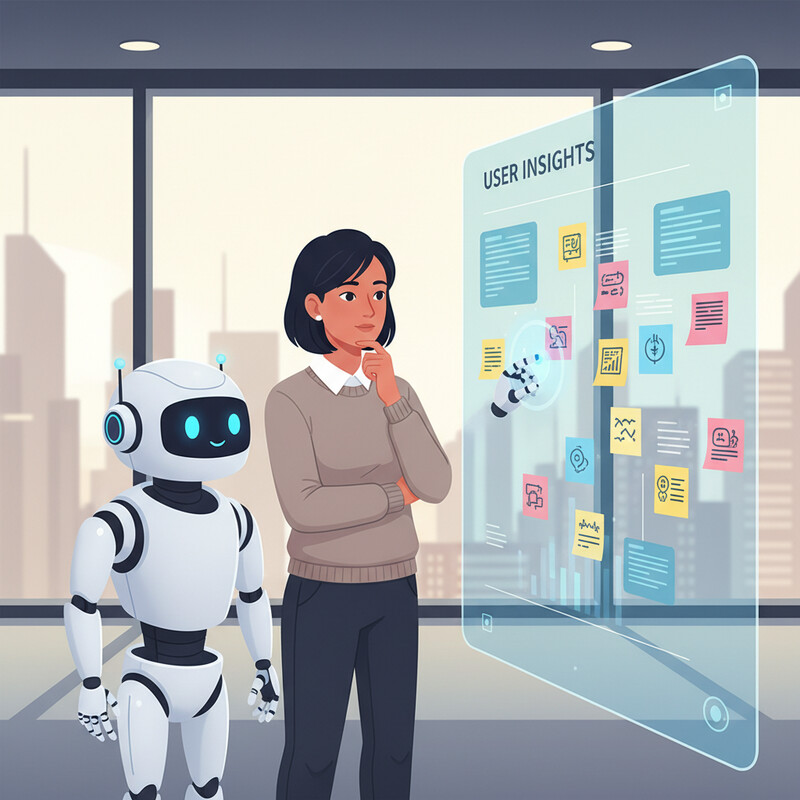
AI tools are flooding our workflows, promising to instantly synthesize user interviews, analyze feedback tickets, and identify key themes from mountains of data. The pitch is seductive: spend less time on tedious analysis and more time on high-level strategy. And in many ways, it’s a game-changer. Automation can surface patterns across datasets that would take a human weeks to find, dramatically accelerating the research cycle.
But here’s the rub: are we outsourcing the most important part of our job? The empathy and deep understanding that comes from immersing ourselves in the raw, unfiltered voice of the customer is irreplaceable. When we rely solely on an AI-generated summary, we risk missing the subtle hesitation in a user’s voice, the frustration behind a specific feature request, or the “aha!” moment hidden in a long-winded explanation.
The goal shouldn’t be to replace human insight, but to augment it. Smart systems can handle the heavy lifting of organizing and triaging feedback, creating a single source of truth that powers both AI analysis and human deep dives. For example, using a centralized hub like https://leera.io allows you to run AI-powered analysis while still giving you one-click access back to the original customer voice. The AI finds the ‘what,’ so you can focus on the ‘why.’
Where do you draw the line between helpful automation and a dangerous dependency?