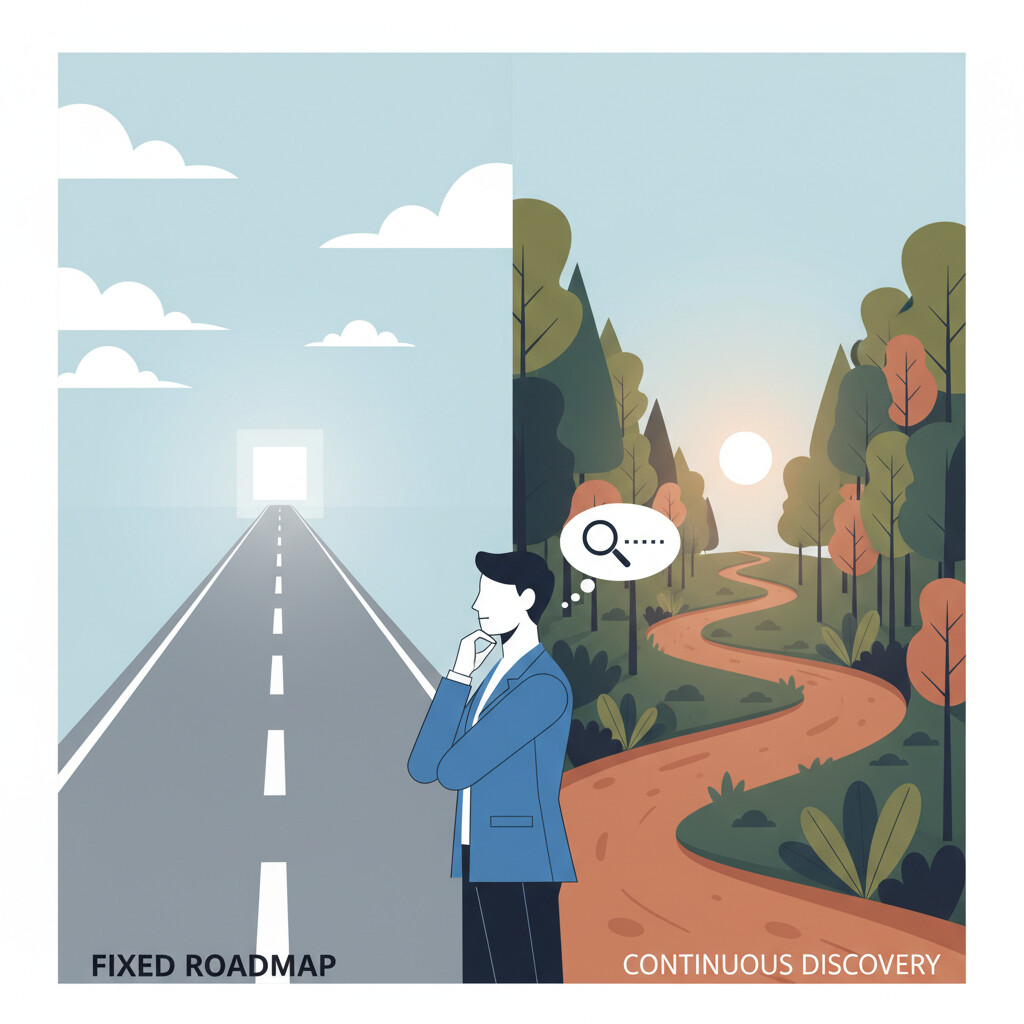
We’ve all been there. Leadership wants to see the beautifully polished, multi-quarter roadmap. Sales needs to know what’s coming next month. Engineering craves predictability to plan their sprints. The pressure to commit is immense.
But here’s the uncomfortable truth: this relentless focus on the roadmap-as-a-contract can kill the very practice that leads to great products—continuous discovery.
True discovery is messy. It’s following unexpected user feedback down a rabbit hole. It’s realizing a core assumption was wrong and needing to pivot. When the roadmap is treated as an unchangeable artifact, these crucial insights become inconvenient truths. We start prioritizing what’s on the plan over what the user actually needs, accumulating ‘feedback debt’ that leads to features that miss the mark.
How do we break this cycle? It starts by reframing the roadmap not as a static plan, but as a dynamic guide informed by a constant stream of discovery. We need systems where a discovery finding can challenge the roadmap, not be silenced by it. Tools that help centralize unstructured user feedback and connect it to the ‘why’ behind roadmap items, like those we’re building at https://leera.io, can help bridge this gap so insights from customer calls aren’t lost.
How does your team balance the demand for a predictable roadmap with the messy, unpredictable nature of continuous user discovery?