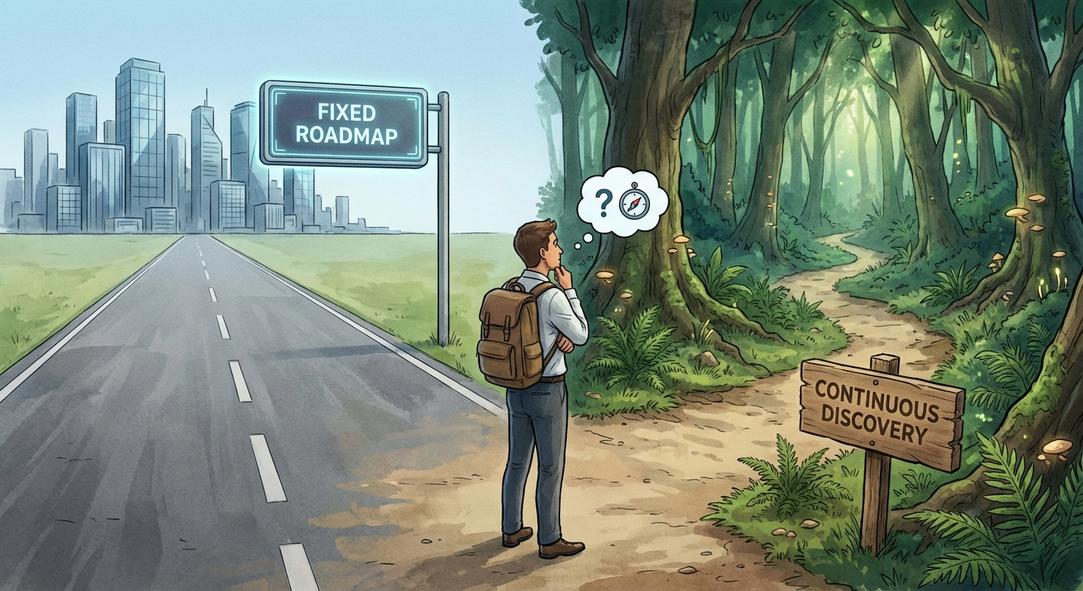
We’ve all been there. A senior stakeholder corners you, asking for “the roadmap” for the next 18 months, complete with features and delivery dates. The pressure is immense to provide a clear, predictable plan that makes everyone feel secure. But as product leaders, we know the truth: a detailed, long-term roadmap is often a work of fiction.
This is the fundamental tension of modern product management: balancing the business’s need for strategic alignment and predictability with the product team’s need for agility and continuous discovery. A roadmap filled with features and dates becomes a GANTT chart, turning the team into a feature factory. It shackles us to outdated assumptions and prevents us from responding to what we learn from users each week.
The most effective roadmaps aren’t release plans; they are statements of strategic intent. They should focus on outcomes and problems to solve, with fidelity decreasing the further out you look. This aligns the organization around a shared vision while empowering the team to find the best solutions. It’s about committing to the problem, not the feature.
How do you manage stakeholder expectations for long-term certainty while protecting your team’s ability to practice continuous discovery and respond to what you’re learning?