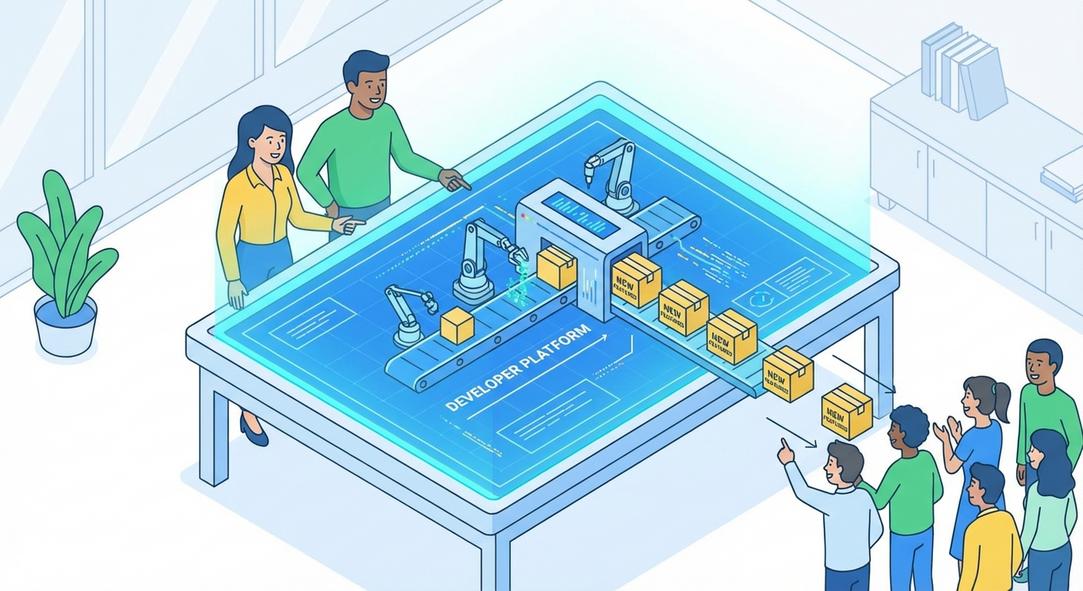
There’s a significant shift happening in engineering orgs that product managers can’t afford to ignore: the rise of platform engineering. This isn’t just another DevOps buzzword; it’s the practice of building an Internal Developer Platform (IDP) that treats your own developers as customers, providing them with the tools and workflows needed to ship code faster and more autonomously.
Why should PMs care? Because the success of this internal ‘product’ directly impacts your external product’s velocity and quality. When engineering carves out capacity for a platform team, it’s a strategic investment in reducing friction for all other feature teams. As a PM, you need to understand this dynamic. The platform team has its own roadmap, its own ‘users’ (developers), and its own metrics for success, like reduced lead time for changes or improved developer satisfaction.
Ignoring this shift can lead to friction and misaligned priorities. Engaging with it means you can better forecast dependencies and appreciate how investments in the developer experience ultimately serve the end-user. It requires a mindset shift from viewing engineering as a service provider to seeing the developer platform as a critical enabling product.
How involved are you with your organization’s platform engineering initiatives, and how do you balance their roadmap needs with your product feature requests?