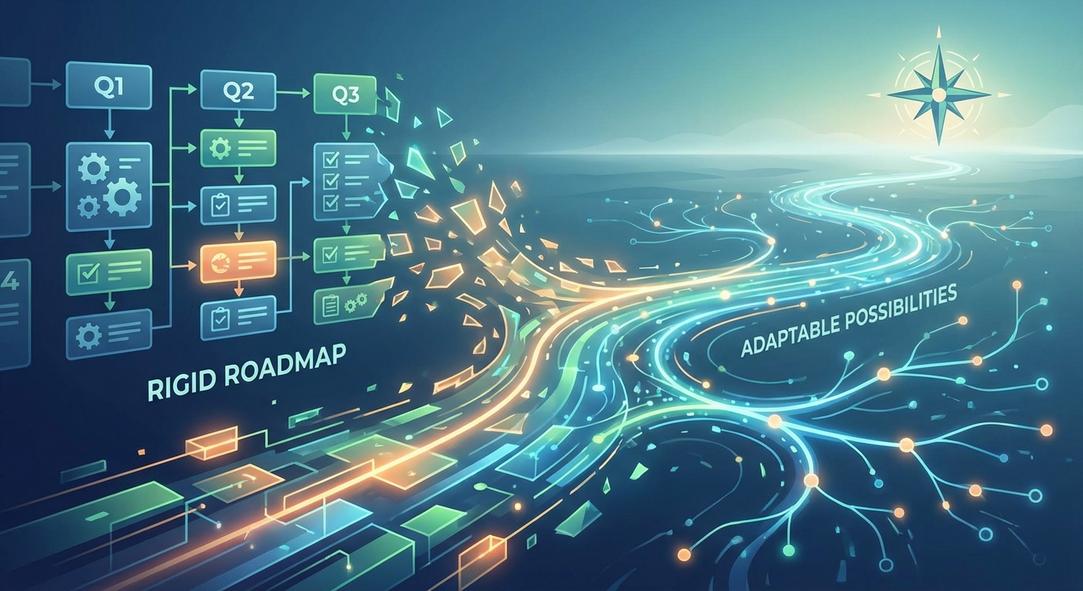
We all know the classic product roadmap: a neat, time-based chart of features promised to stakeholders. It provides a comforting sense of certainty. But in an era of AI-driven development and a renewed emphasis on continuous discovery, is this model becoming an anchor rather than a rudder?
Recent discussions highlight a growing tension between the executive desire for long-term predictability and the on-the-ground reality of agile development. Teams can now build, test, and invalidate ideas faster than ever. Committing to a feature set 12 months out feels increasingly disconnected from a truly user-centric approach. The focus is shifting from a ‘feature factory’ assembly line to an ‘impact engine’ focused on outcomes. This means replacing the question “What will we ship in Q4?” with “How will we move our core metric in Q4?”
This requires a profound shift in how we communicate with leadership and sales. We aren’t selling a specific feature list; we’re selling a commitment to solving a customer problem and achieving a business outcome. It’s a move from certainty of scope to certainty of vision and purpose.
How are you navigating this in your organization? Are you finding that detailed, long-term roadmaps are helping or hindering your ability to build the right thing for your users?