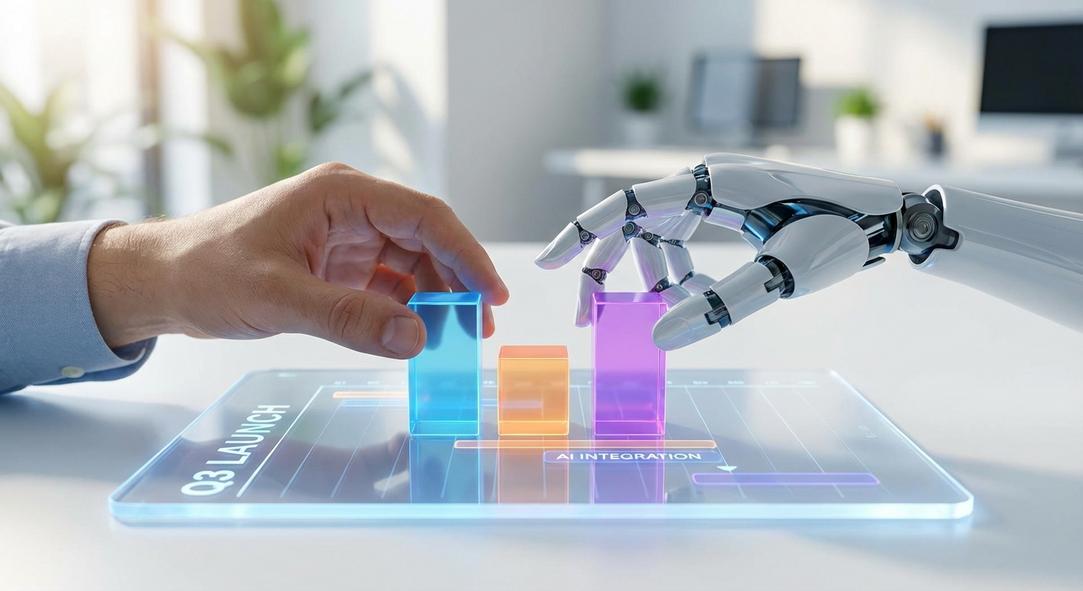
There’s endless talk about building AI into our products, but the more interesting conversation is how AI is changing the process of product management itself. We’re rapidly moving beyond just shipping AI features to using AI as a core member of the product team.
Tools that transcribe and summarize user interviews, analyze thousands of feedback tickets for sentiment, or draft initial user stories are becoming mainstream. This isn’t just about saving time; it’s a fundamental shift in our roles. When the tactical work of data synthesis and documentation is automated, our value as PMs must gravitate even more towards strategic thinking, vision, stakeholder diplomacy, and deep customer empathy—the things a machine can’t easily replicate.
But this evolution presents a challenge. If an AI can instantly identify the most critical user problems from a dataset, how does that change the way a junior PM develops their product sense? We’re shifting from being the primary ‘doer’ to becoming a ‘strategist-in-the-loop,’ guiding and validating the output of our AI co-pilots. The core of our job is elevating from execution to orchestration.