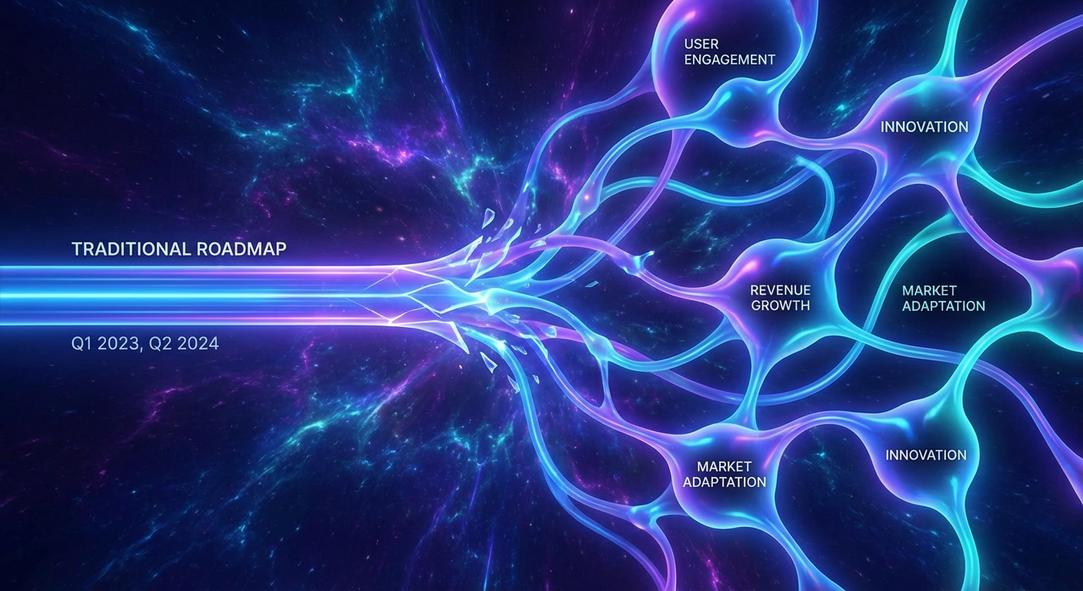
We’ve all been in meetings where sales and leadership ask for the 12-month roadmap, a concrete list of features and dates. For years, this has been our contract of certainty. But in an era where AI can change user expectations overnight and market dynamics shift quarterly, does that contract still hold up?
I’m seeing a growing tension between the traditional, feature-based roadmap and the principles of continuous discovery and agile development. The former provides a comforting illusion of predictability, while the latter embraces the reality of uncertainty and prioritizes learning and outcomes over output. Committing to a feature a year from now feels less like strategic planning and more like guesswork.
Moving to theme-based or outcome-oriented roadmaps seems like the logical evolution. We focus on the problems we want to solve (“Increase user activation by 15%”) rather than the specific solutions (“Build a new onboarding wizard”). This empowers teams to innovate and pivot based on what they learn. Yet, the business often still craves those concrete timelines. This is the central conflict for many PMs today.
How are you navigating this? Are you successfully shifting your organization towards outcome-based roadmaps, or are you finding new ways to make traditional roadmaps more flexible?