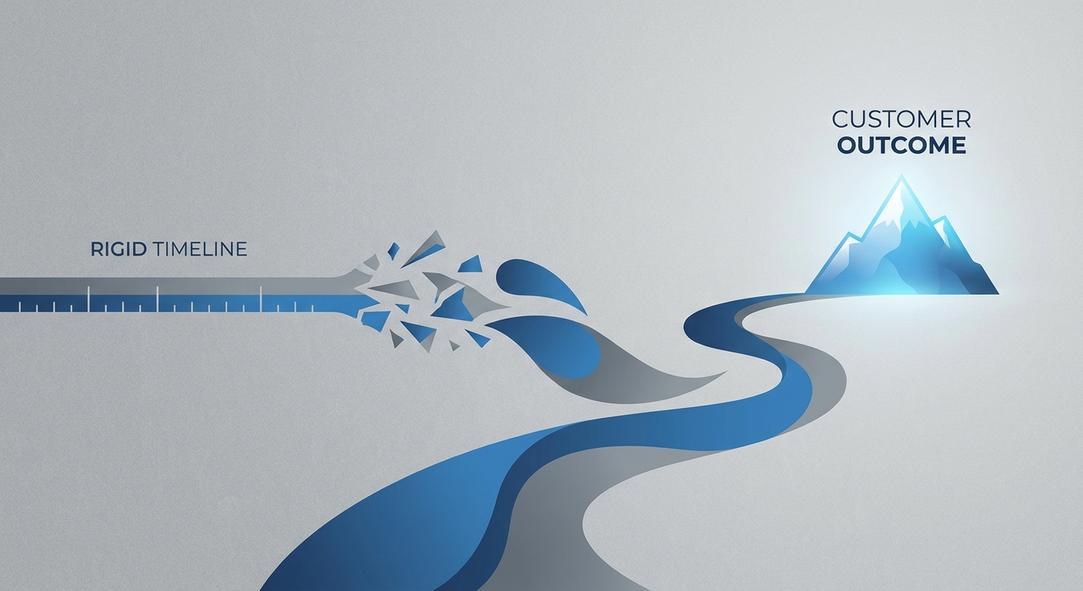
We’ve all been there. A beautifully detailed, timeline-based roadmap that gives stakeholders that warm, fuzzy feeling of predictability. It shows exactly what feature will ship in which quarter. But in a market where AI capabilities and user expectations can shift overnight, how valuable is that predictability?
More often than not, this rigid adherence to a feature timeline chains us to the ‘feature factory.’ We become so focused on shipping the thing on schedule that we lose sight of the value it’s supposed to deliver. The plan becomes more important than the outcome, and agility dies.
This is where outcome-based roadmaps come in. Instead of committing to ‘Ship Feature X in Q3,’ the goal becomes ‘Increase user activation by 15% in H2.’ This decouples the problem from a single solution, empowering teams to research, iterate, and pivot to find the most effective way to hit the goal. It transforms the roadmap from a project plan into a true strategic document that aligns the entire company around customer value, not just code delivery.
It’s a big shift, moving from the comfort of certainty to the ambiguity of outcomes. But isn’t that where real product innovation happens?