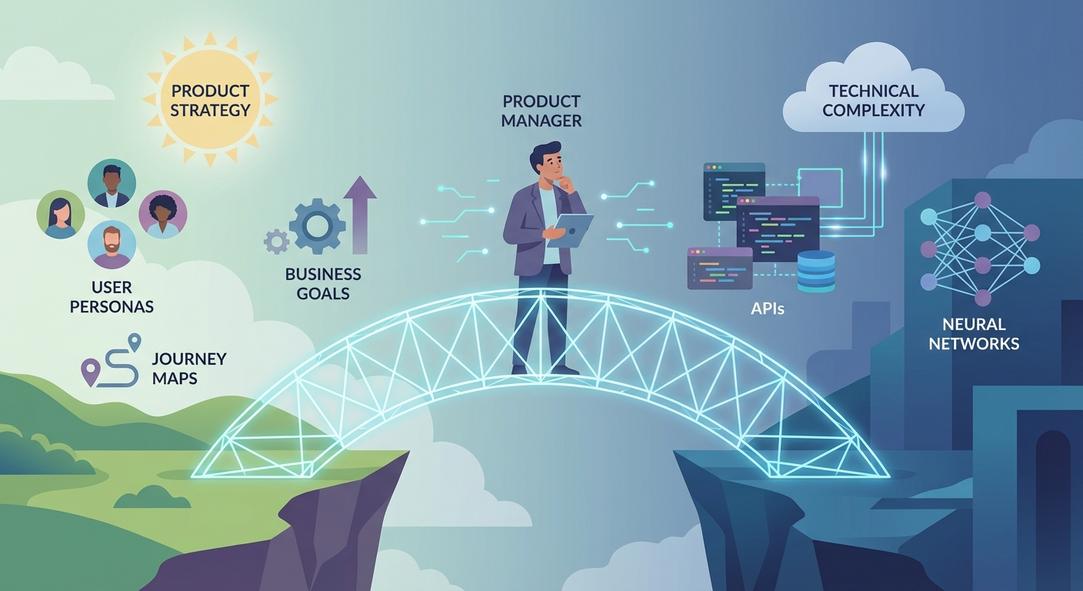
We’ve all heard the classic advice for product managers: you don’t need to be an engineer, just ‘technical enough’ to have credible conversations. For years, this meant understanding system architecture, knowing your way around an API, and maybe writing a simple SQL query. But is that baseline still sufficient?
Lately, I’m seeing a shift. With the rise of AI/ML products, complex data platforms, and increasingly intricate microservices, the definition of ‘technical enough’ seems to be expanding dramatically. Key product decisions are now deeply embedded in technical trade-offs—things like model accuracy versus latency, choosing the right data architecture, or defining a scalable API strategy. These aren’t just implementation details; they are fundamental to the user experience and business viability.
When we can’t meaningfully engage in these discussions, we risk abdicating strategic choices to our engineering counterparts. We can get pushed out of the core problem-solving and become backlog administrators. While deep trust with a tech lead is invaluable, is it a substitute for our own informed perspective?
How are you or your teams navigating this growing need for deeper technical fluency, and where do you think the modern PM’s technical responsibilities should end?