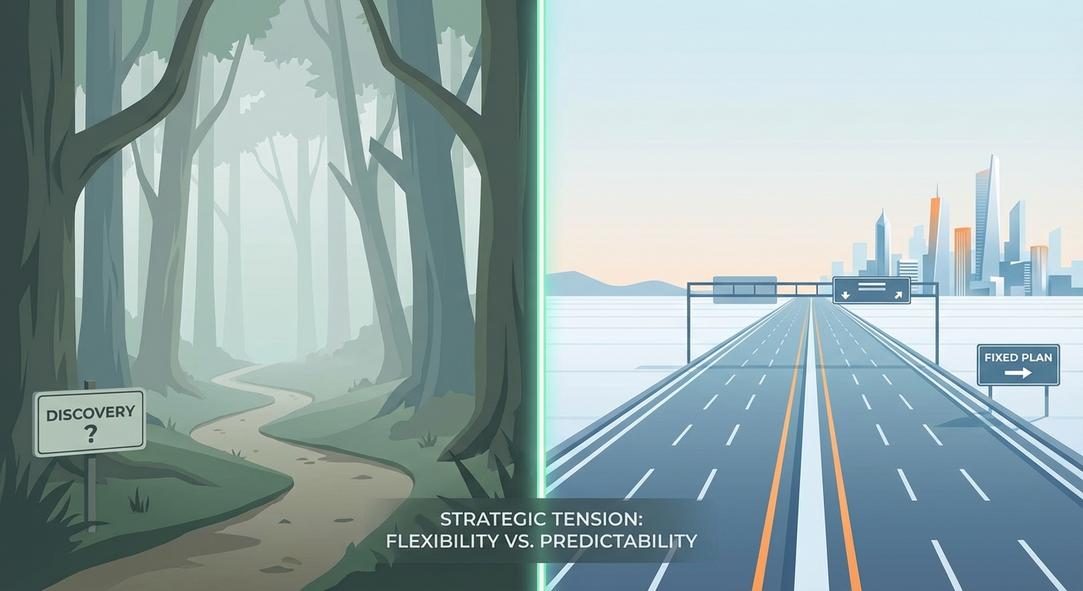
We’re all taught to embrace uncertainty and follow a path of continuous discovery. We run experiments, talk to users, and pivot based on what we learn. Yet, we’re often asked by leadership and sales for a 12-month roadmap with feature-level commitments and hard deadlines. This creates a fundamental tension every PM has to navigate.
This isn’t just a communication problem; it’s a strategic one. A roadmap treated as a Gantt chart becomes a chain, locking you into delivering features that may become irrelevant as you learn more about your market and users. But a roadmap that’s too vague can cause stakeholders to lose confidence, feeling like there’s no clear plan.
The best PMs master the art of balancing these two opposing forces. They frame their roadmaps around outcomes, not outputs. They use themes and problem statements to communicate strategic direction while creating space for discovery and iteration at the tactical level. They build trust not by promising features, but by consistently delivering value and communicating the ‘why’ behind their priorities.
So, what are your best tactics for getting stakeholder buy-in on an outcome-based roadmap that embraces uncertainty?