Hey everyone,
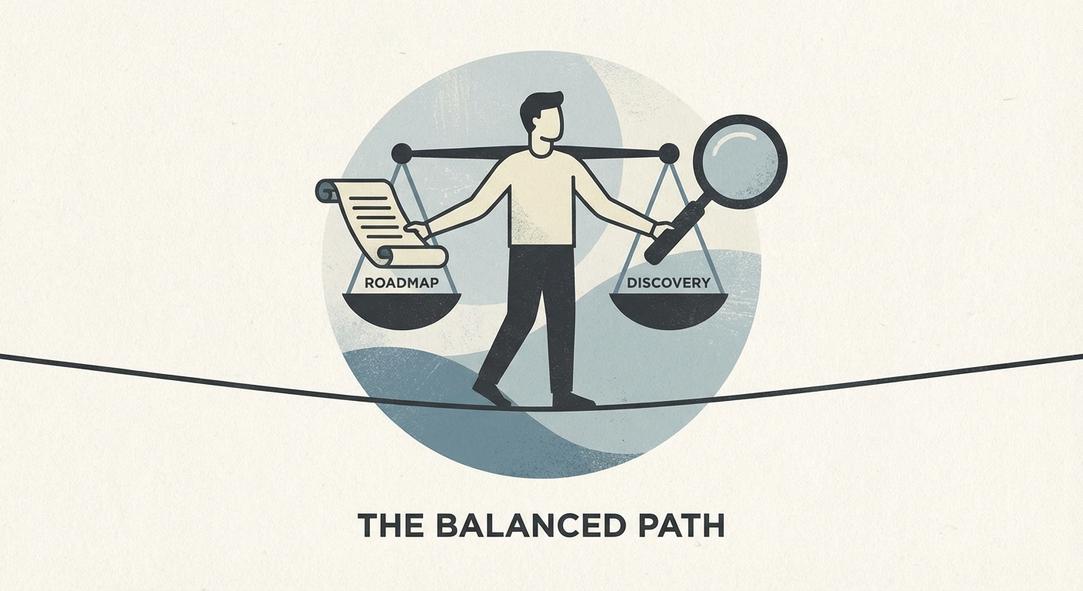
I’ve been seeing a lot of chatter lately about a classic tension that feels more relevant than ever: the tug-of-war between the long-term strategic roadmap and the practice of continuous discovery.
On one hand, our stakeholders and leadership crave predictability. They want a 12-18 month roadmap that lays out a clear, committed plan. It helps with budgeting, sales forecasting, and marketing alignment. On the other hand, the core of modern product management is about staying close to the customer, running experiments, and adapting to what we learn. True continuous discovery means accepting that we don’t have all the answers and that the plan will change.
When a rigid roadmap is king, discovery can become theater. We go through the motions of user research, but the path is already set. We risk becoming a feature factory, efficiently delivering outputs that don’t necessarily create customer value or desired outcomes. We lose the agility that’s supposed to be our superpower.
But we can’t just throw the roadmap away, either. The key is finding a balance. How do we build roadmaps that provide strategic direction without stifling the learning process?
So, my question for the community is: How do you structure your roadmapping process to genuinely incorporate continuous discovery instead of conflicting with it?