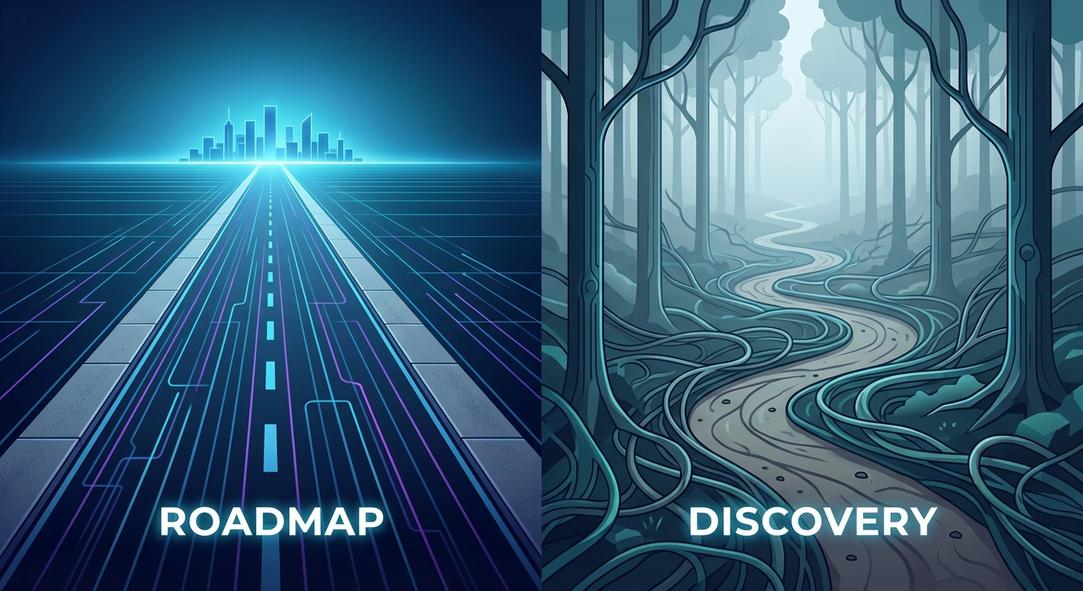
We’ve all been there. Leadership and sales are asking for a detailed, multi-quarter roadmap with clear feature delivery dates. They need predictability to plan their own work. But as product managers, we know the truth: our best insights and most impactful features come from continuous discovery, user feedback, and the messy, unpredictable process of iteration. A rigid, feature-based roadmap can quickly become a liability, locking us into solutions before we’ve even properly validated the problem.\n\nThis tension between the need for a strategic plan and the reality of agile development is a classic PM challenge. A roadmap shouldn’t be a Gantt chart in disguise; it should be a statement of intent, a communication tool focused on customer outcomes and business objectives, not a list of features and deadlines. It’s our job to shift the conversation from ‘What are we building and when?’ to ‘What problems are we solving and how will we measure success?’ By framing our roadmaps around problems-to-be-solved and desired outcomes, we can create strategic alignment while giving our teams the autonomy to discover the best solutions.\n\nHow do you balance the need for a long-term strategic roadmap with the flexibility required for continuous discovery in your organization?