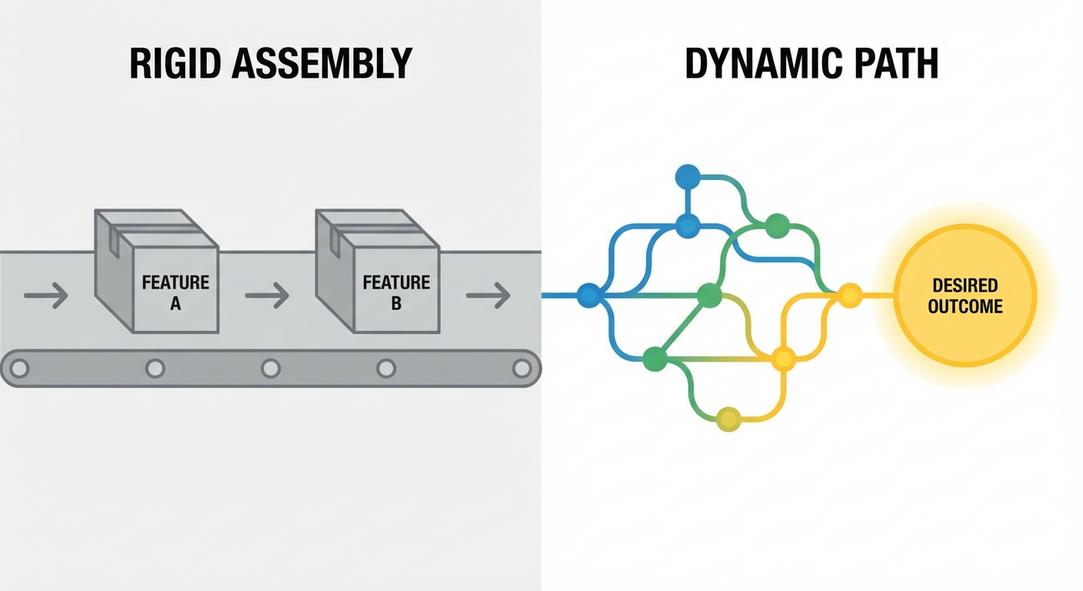
We’ve all been there. A beautifully crafted roadmap, Gantt chart in all its glory, with features planned out for the next three quarters. It gives our stakeholders a sense of security and our teams a clear (if rigid) path forward.
But does it really serve the product? More often than not, this ‘feature factory’ approach chains us to outputs, not outcomes. We become so focused on shipping the thing that we lose sight of whether it’s actually solving a customer problem or moving our business metrics. The roadmap becomes a list of promises rather than a tool for learning.
This is where the shift to outcome-based roadmaps comes in. Instead of promising ‘Feature X by Q3,’ we commit to ‘Increase user activation by 15% in H2.’ This shift empowers the team to discover the best solution, fosters true agility, and aligns everyone around creating genuine value. Of course, the transition is tough. It requires a massive cultural shift and earning a different kind of trust from leadership—trust in the team’s ability to solve problems, not just ship features on a timeline.
How have you successfully managed the transition from a feature-based roadmap to an outcome-driven one, especially when facing stakeholder resistance to the inherent uncertainty?