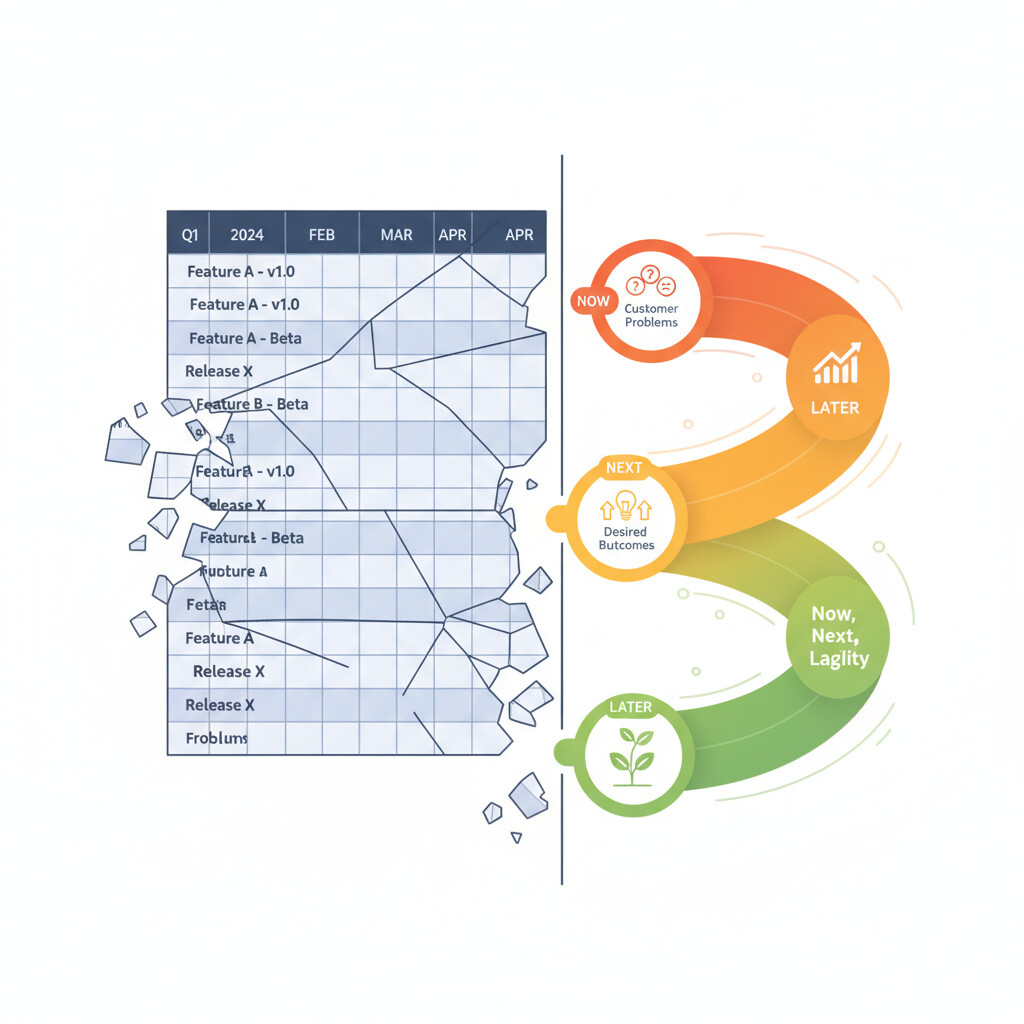
We’ve all been there. A senior stakeholder asks for “the roadmap,” and what they really mean is a Gantt chart with features and dates locked in for the next 12 months. It provides a comforting illusion of certainty. But is that comfort blanket secretly sabotaging our product?
This desire for predictability constantly clashes with the core principles of agile development. A date-driven, feature-focused roadmap forces us into a “feature factory” mindset, measuring success by output instead of impact. When we inevitably learn something new from customers or the market, the roadmap becomes a rigid barrier to adaptation rather than a strategic guide. We spend more time defending shifting timelines than we do solving actual user problems.
The alternative is to roadmap outcomes. Frameworks like Now-Next-Later shift the conversation from “What will we ship and when?” to “What customer problems will we solve and what outcomes will we drive?” This aligns everyone on strategy while giving the development team the autonomy to discover the best solution. Transparently tracking progress against these outcomes is key to building trust. At Leera, we’ve found that integrating user feedback directly into our planning process helps stakeholders see the “why” behind our priorities, making the transition to an outcome-focus much smoother.
Shifting an organization’s mindset is never easy, but it’s essential for building products that win.
How have you successfully managed stakeholder expectations when moving from a feature-based roadmap to an outcome-driven one?