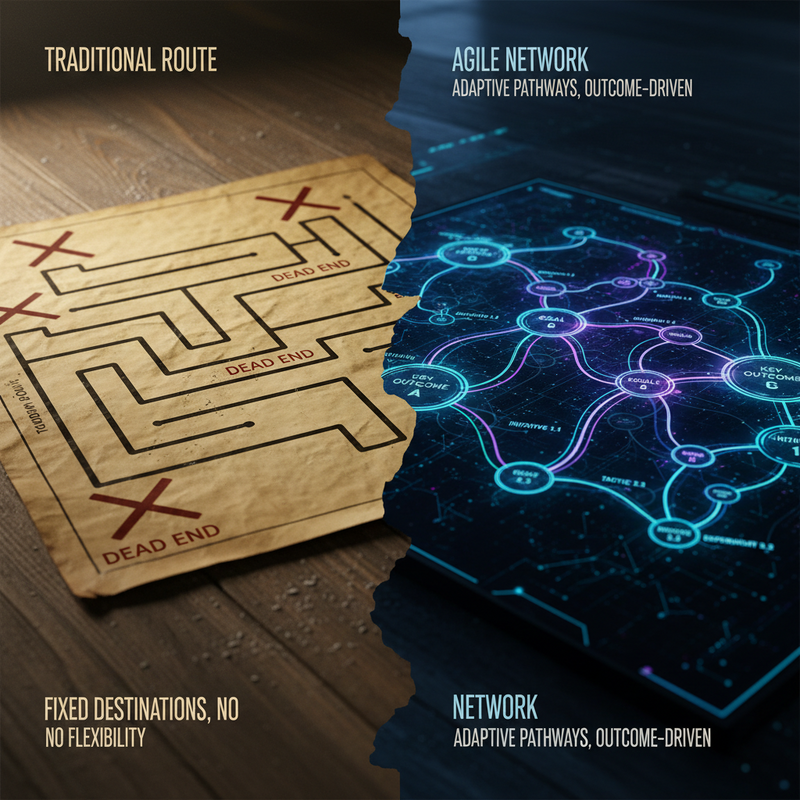
We’ve all been there. Spending the last quarter of the year in endless meetings, meticulously planning a beautiful, detailed annual roadmap. Then, by February, a competitor makes a move, a key customer churns with unexpected feedback, or a new technology emerges, and the whole plan is thrown into disarray. The annual roadmap becomes a monument to outdated assumptions.
The core issue is that in today’s fast-paced market, a rigid, feature-based timeline is a liability. It anchors us to outputs, not outcomes. We become so focused on shipping what we said we would that we lose sight of why we were doing it in the first place. This is where the shift towards theme-based or outcome-driven roadmaps becomes critical.
Instead of a 12-month Gantt chart, what if our roadmap was a statement of intent? “In Q1, we will solve the user onboarding friction that’s killing our activation rate. In Q2, we will tackle the performance issues impacting our power users.” This approach empowers teams to be agile and creative in finding the best solutions. It requires clear communication and strong alignment, ensuring everyone from engineering to marketing is rallied around the same goals—a process that’s much smoother with tools that connect our work to our conversations. At https://leera.io, we see teams thrive when they focus on the ‘why’ over the ‘what’.
This shift isn’t easy, as it challenges traditional stakeholder expectations for predictability.
How do you balance providing long-term strategic direction with the practical need for short-term agility in your planning?