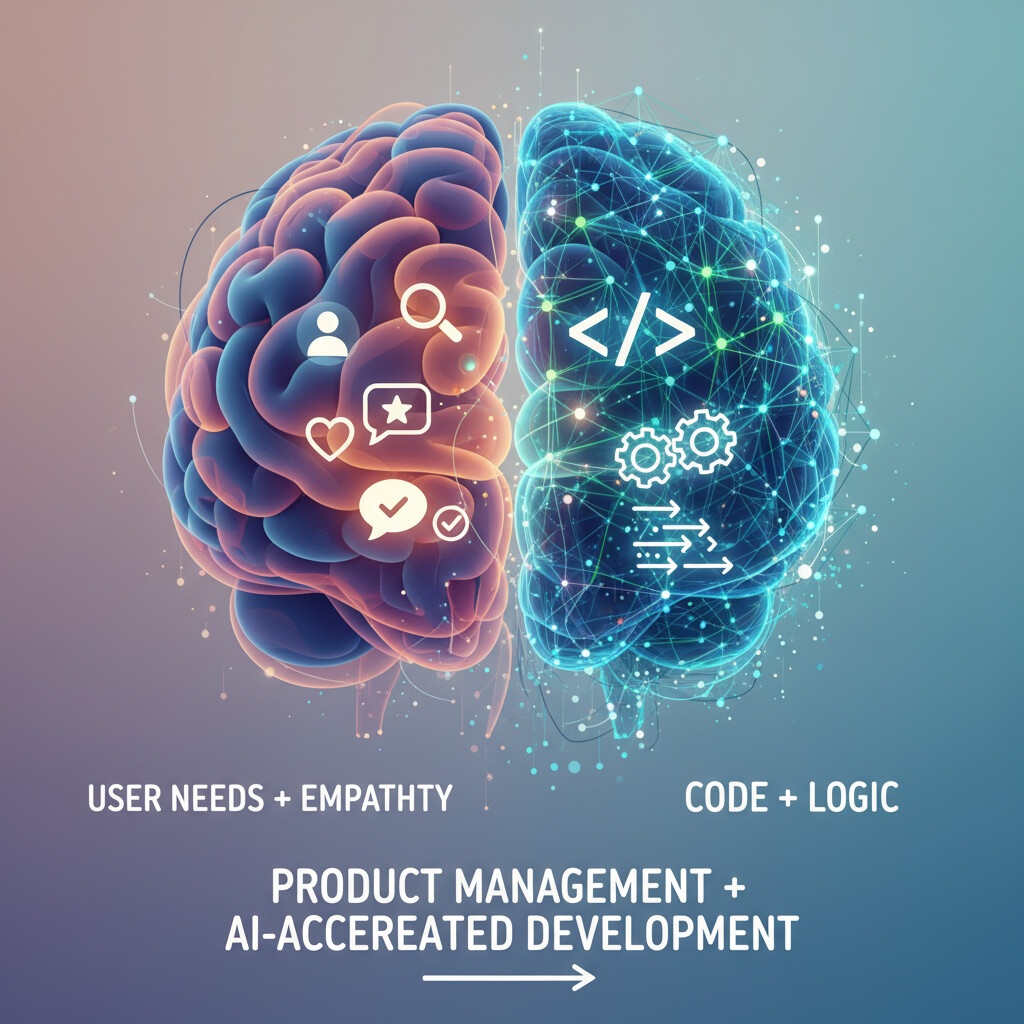
Let’s talk about a shift that’s happening right now, not in a distant future: our engineering counterparts are using AI assistants like GitHub Copilot to write, refactor, and ship code faster than ever. This isn’t just an engineering-level change; it’s a product management earthquake.
If development cycles are compressing from weeks to days, the bottleneck immediately shifts to us. Are our discovery processes agile enough to keep up? When an engineer can generate the ‘how’ in minutes, our role in defining the ‘what’ and ‘why’ with extreme clarity becomes paramount. Vague user stories or ill-defined acceptance criteria are no longer just an annoyance—they are a complete roadblock to this new pace of development.
This acceleration puts immense pressure on our feedback loops. We can’t afford to wait until the end of a two-week sprint to get user insights. Continuous validation is more critical than ever. As we adapt, leveraging platforms to rapidly synthesize user feedback from sources like interviews and support tickets becomes a strategic advantage, helping ensure that what we’re building faster is also what users actually need. Platforms like Leera.io are becoming essential for closing that loop at speed.
This changes everything from roadmap planning to story estimation. If a significant portion of the code can be AI-generated, how do we effectively size up the work?
How have you started adapting your product discovery and spec-writing processes for an AI-accelerated engineering team?